


Polycystic Ovary Syndrome (PCOS) is one of the most common hormonal conditions affecting women of reproductive age. It can be associated with irregular periods, acne, unwanted facial or body hair, and other symptoms linked to hormonal changes.
Because PCOS can look different from one woman to another, many are exploring simple lifestyle habits that may complement their overall approach to wellness. One that has gained attention is spearmint tea.
But why spearmint tea? And what does the research actually say?
The connection between PCOS and androgens
One reason spearmint tea has attracted interest is its potential relationship with androgens, a group of hormones that includes testosterone.
Women naturally produce androgens, but some women with PCOS have higher-than-usual androgen levels or increased sensitivity to these hormones. This can contribute to symptoms such as unwanted facial hair, oily skin, and acne.
This is sometimes referred to as hyperandrogenism, and it is one of the features doctors may consider when evaluating PCOS.
That’s where spearmint tea enters the conversation.
What does the research say about spearmint tea and PCOS?
A few small clinical studies have investigated whether drinking spearmint tea may influence androgen levels in women.
In one study involving women with hirsutism (excess facial or body hair), participants drank spearmint tea twice daily. Researchers observed reductions in free and total testosterone levels, along with changes in other hormone measurements.
Another small study involving women with PCOS also reported changes in androgen-related hormone levels after regular consumption of spearmint tea.
These findings are interesting—but they need to be put into perspective.
The studies have generally involved small numbers of participants, and research on spearmint tea and PCOS remains limited. Lowering a hormone measurement in a study also doesn’t automatically mean that every woman will experience a noticeable improvement in symptoms.
So, while the early research is encouraging, we still need larger and longer-term studies to understand how meaningful the effects may be.
Can spearmint tea help with facial hair?
Unwanted facial hair, or hirsutism, is one of the symptoms that has generated interest in spearmint tea.
Because excess androgen activity can influence hair growth, researchers have investigated whether spearmint’s potential effects on androgen levels could also be relevant to hirsutism.
However, hair growth is a slow process. Even when hormone levels change, existing facial hair does not simply disappear overnight. Hair follicles have their own growth cycles, which means any visible change (if it occurs) may take time.
It’s therefore more accurate to think of spearmint tea as a potential supportive habit, rather than a quick solution for unwanted facial hair.
What about hormonal acne?
Hormonal acne is another common concern among women with PCOS, particularly breakouts around the jawline, chin, and lower face.
Androgens can influence oil production and contribute to acne in some women. Because spearmint tea has been studied for its possible effects on androgen levels, it has naturally become part of the conversation around hormonal acne as well.
But there’s an important distinction:
Research on spearmint tea and androgen levels is not the same as proof that spearmint tea treats acne.
At this point, there isn’t enough evidence to say that drinking spearmint tea will clear hormonal acne. If acne is persistent or severe, appropriate skincare and medical treatment may be much more effective.
Why are women adding spearmint tea to their routine?
Part of spearmint tea’s appeal is its simplicity.
It’s naturally caffeine-free, refreshing, easy to prepare, and can become a small daily ritual. For women who already enjoy herbal tea, adding a cup to their routine can feel like an approachable way to explore a wellness habit.
And sometimes, sustainable habits are the ones that are easiest to repeat.
Spearmint tea doesn’t need to replace everything else you’re doing. It can simply be one small part of a broader routine that may include balanced nutrition, regular movement, sufficient sleep, stress management, and appropriate medical care.
How often should you drink spearmint tea?
Some of the early clinical studies on spearmint tea and androgen levels used two cups per day.
However, there is not currently enough evidence to establish a universally recommended amount of spearmint tea specifically for PCOS.
If you’re considering drinking spearmint tea regularly, especially if you take medication or have an existing medical condition, it’s sensible to discuss it with your healthcare professional.
And remember: more is not necessarily better. A sustainable routine is generally more practical than trying to consume large amounts in pursuit of faster results.
Is spearmint tea a cure for PCOS?
No.
This is important.
Spearmint tea does not cure PCOS, and it should not replace medical treatment.
PCOS is a complex condition with different symptoms and underlying factors. What works for one woman may not work for another, and treatment should be tailored to individual needs.
The research around spearmint tea is promising enough to be interesting, but not strong enough to make broad medical claims.
Think of it as a potentially supportive daily habit >> not a treatment.
A simple way to start
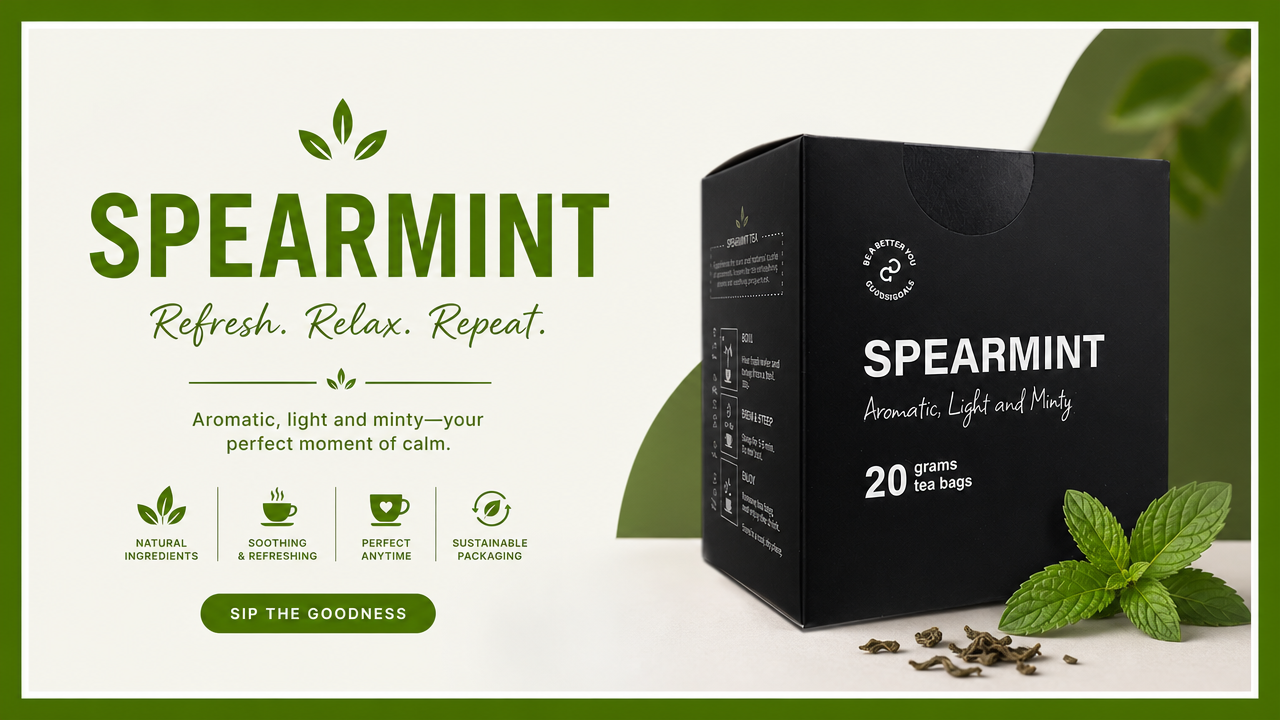
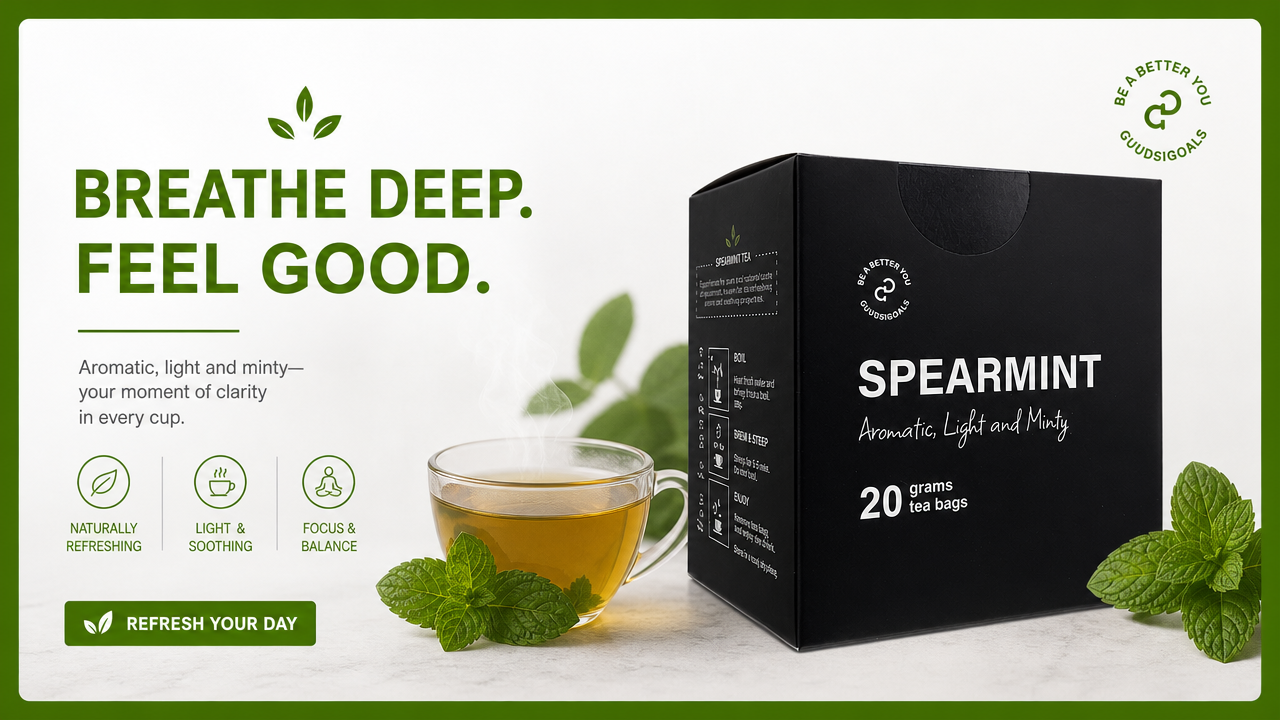
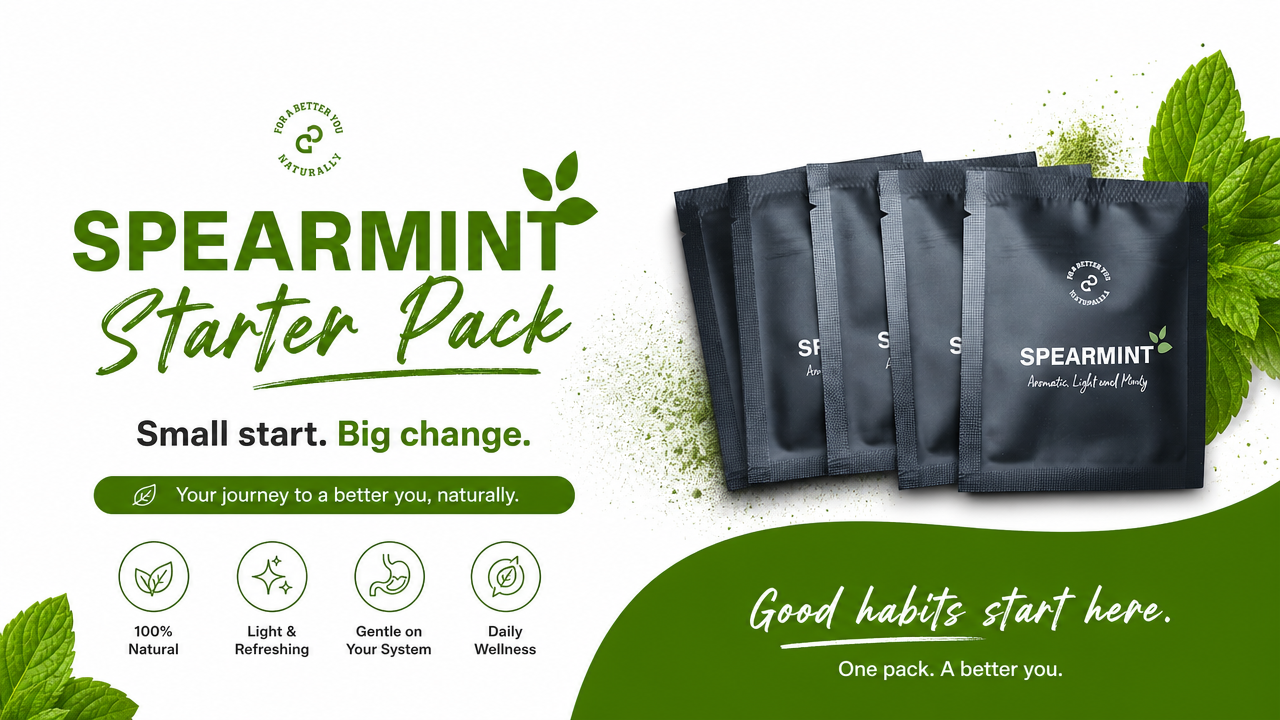
If you’re curious about spearmint tea, starting with a small pack can be an easy way to see whether you enjoy it as part of your routine.
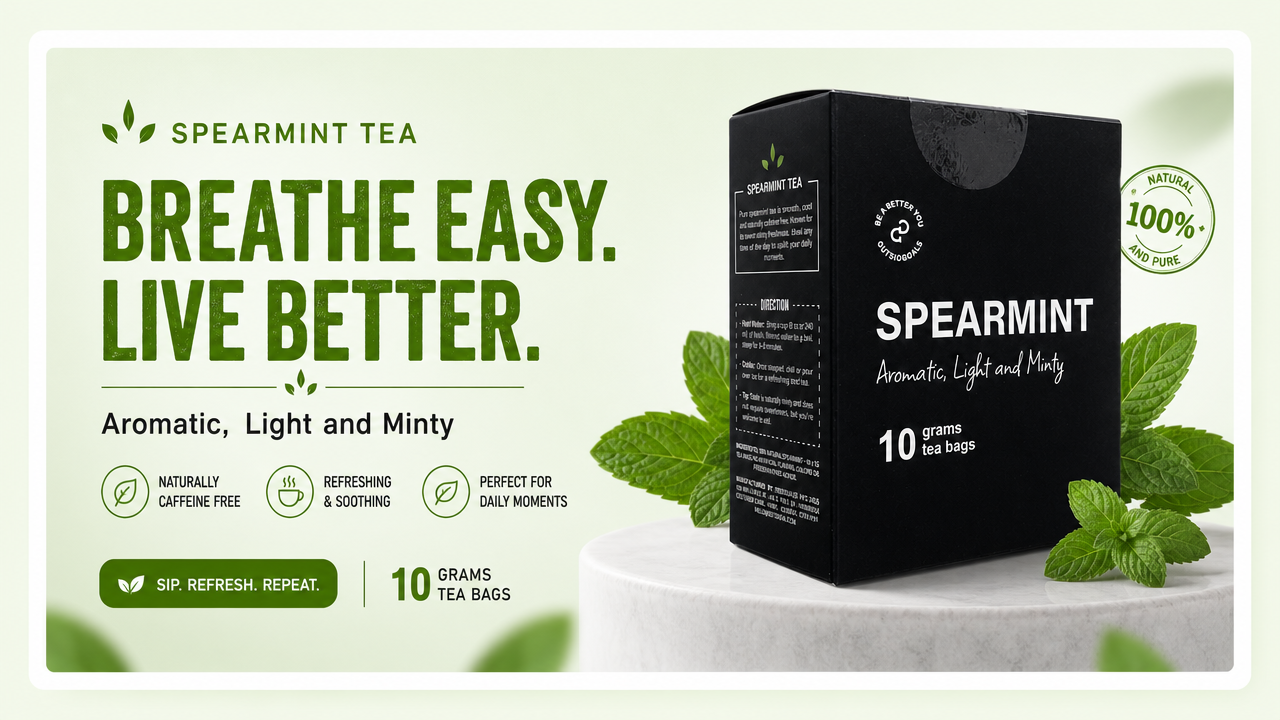
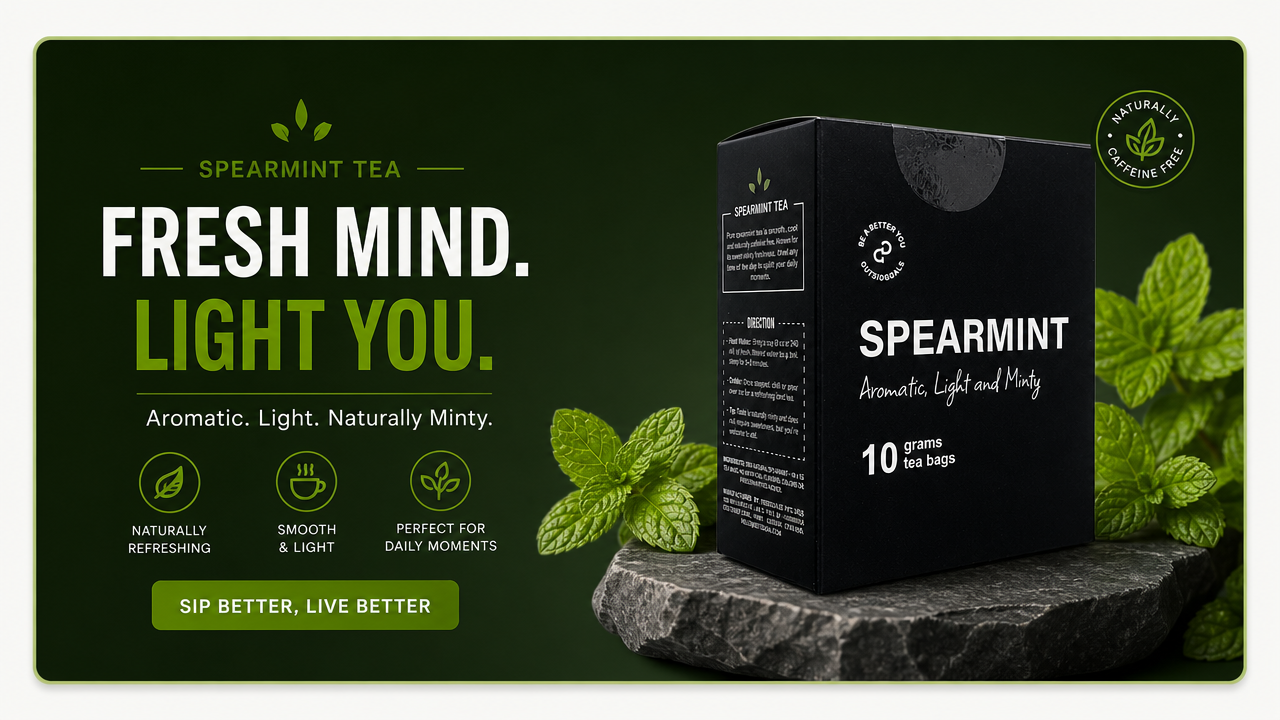
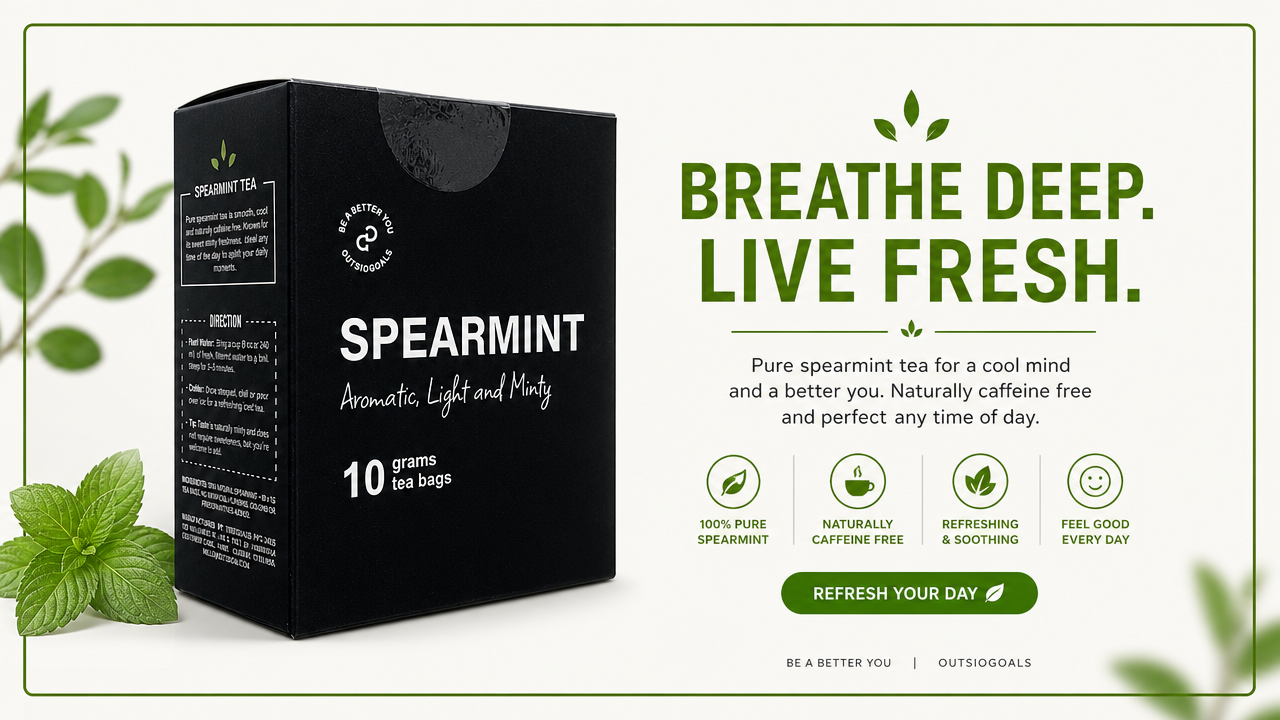
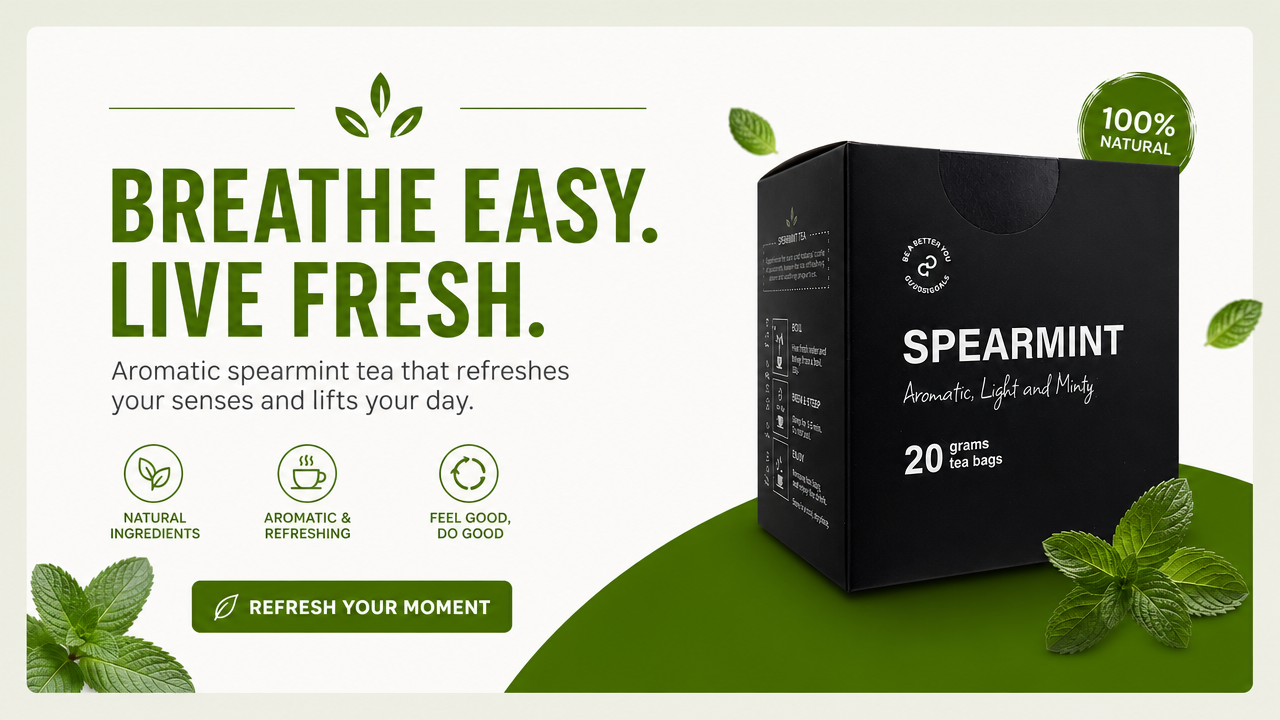
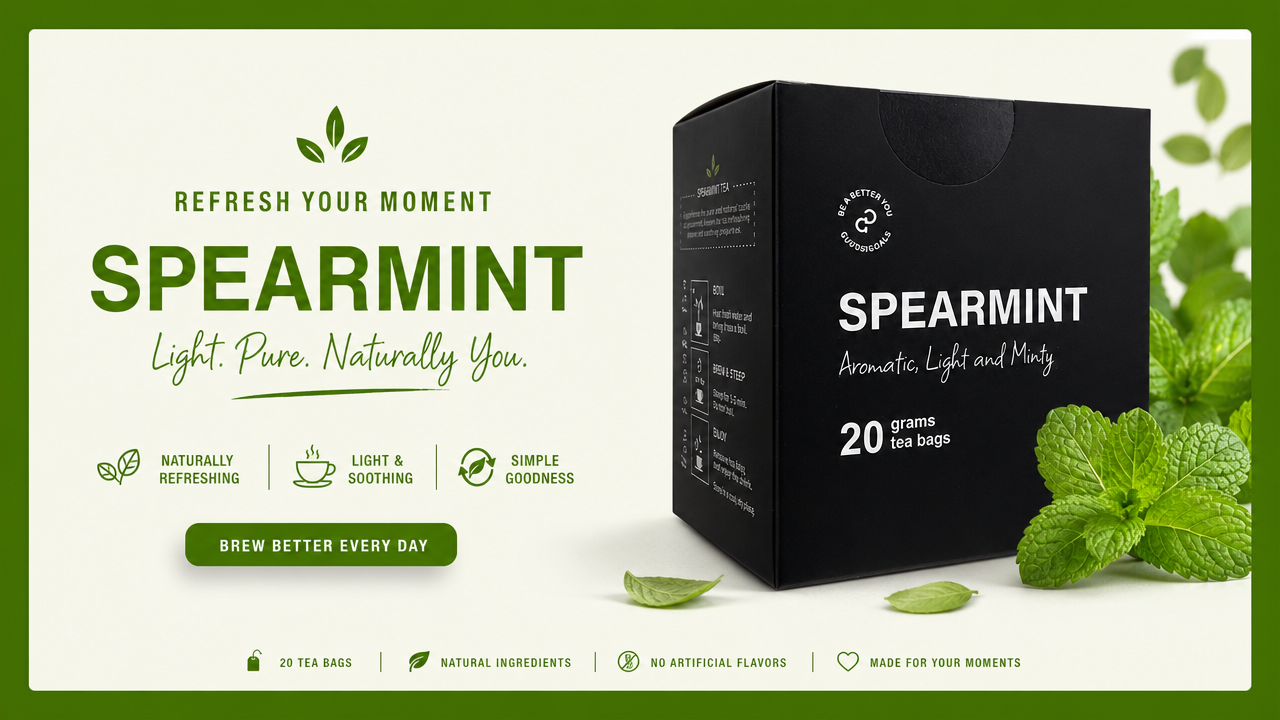
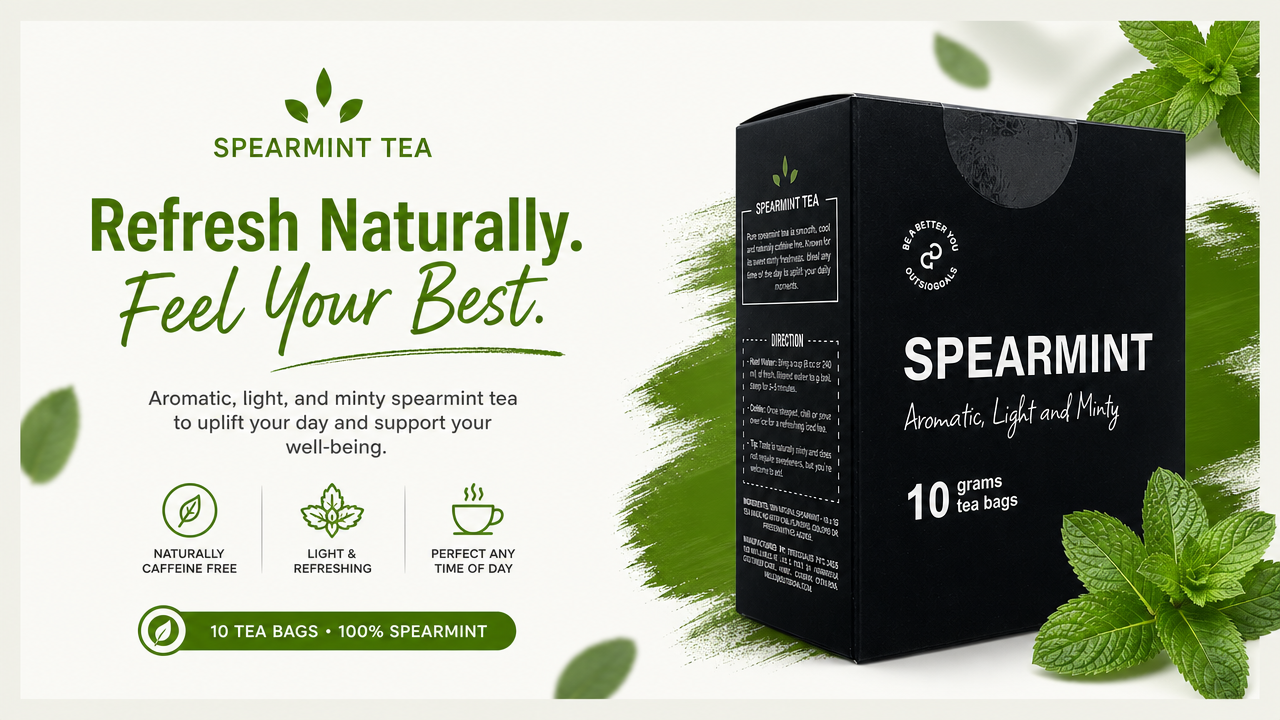
Guts To Goals Spearmint Tea 5-pcs Starter Pack is made for exactly that: a simple way to try spearmint tea without committing to a larger pack.
Enjoy it warm, make it part of your afternoon routine, or simply use it as a refreshing caffeine-free tea whenever you want a little pause in your day.
Small habits. Consistent care. One cup at a time.
Guts To Goals — Be a Better You.
A final note
If you think you may have PCOS or you’re experiencing irregular periods, persistent acne, or unwanted facial or body hair; consider speaking with a qualified healthcare professional. Proper diagnosis is important because these symptoms can have several possible causes.
Spearmint tea can be part of a wellness routine, but your overall health deserves a more complete approach.




Comments
No comments yet. Be the first to share your thoughts!