









Understanding the whispers of your body.
Polycystic Ovary Syndrome (PCOS) or now known as Polyendocrine Metabolic Ovarian Syndrome (PMOS) doesn’t have a single “look.” For some, it begins with a cycle that simply drifts away. For others, it shows up as skin that suddenly feels like a stranger, weight that won’t budge despite the effort, or a level of exhaustion that sleep cannot touch.
Because these signals vary, many of us spend years in a cloud of confusion—trying to fix the surface without understanding the source.
Why PCOS Signals Can Feel So Overwhelming
PCOS isn’t just a “hormone problem.” It’s a complex internal rhythm involving your metabolism, your stress response (cortisol), and your inflammatory markers. This is why you might feel like you’re managing ten different issues at once.
At Guts To Goals, we believe these aren’t just random symptoms. They are your body’s way of asking for a different kind of support—one rooted in consistency rather than intensity.
8 Common Signals to Watch For
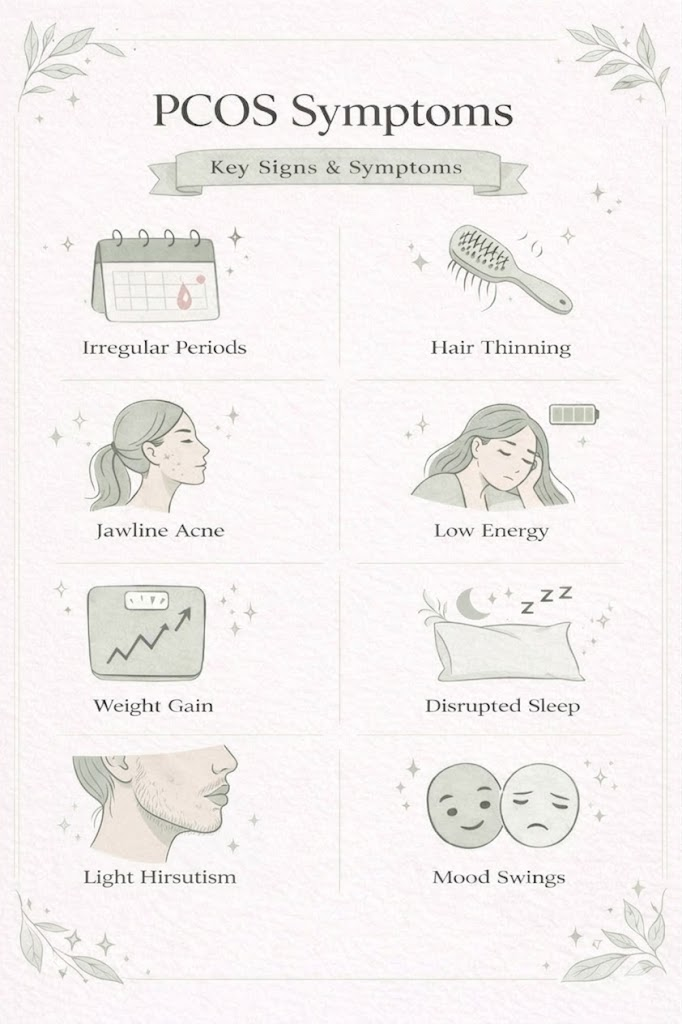
1. Irregular or “Missing” Periods
One of the most common signs of PCOS is an unpredictable cycle. This isn’t just about convenience; it’s a sign that ovulation—the “main event” of your cycle—is hitting a pause button.
- Skipping months at a time.
- Cycles that feel endlessly long (over 35 days).
- The anxiety of never knowing when “Day 1” will arrive.
2. Persistent Jawline Acne & Skin Changes
If you’ve noticed deep, inflamed breakouts specifically along your jawline, chin, and neck, your skin is likely reacting to a surge in androgens (hormones often associated with male traits, but present in everyone). Unlike typical congestion, this “hormonal acne” often resists standard skincare because the cause is internal.
3. The “Metabolic Stall” (Weight Fluctuations)
Many women experience weight changes that feel disconnected from their habits. Even with balanced eating and movement, progress feels heavy and slow. This is often tied to insulin resistance, where your body struggles to turn fuel into energy, storing it instead.
4. Hirsutism (Unexpected Hair Growth)
Higher androgen levels can lead to thicker, darker hair growth on the face, chest, or abdomen. We know how much this can impact your confidence—it’s one of the most personal parts of the PCOS journey.
5. Scalp Thinning & Hair Volume
While hair may grow where you don’t want it, you might notice the hair on your head feels thinner or less voluminous. This “hormonal shedding” is a common signal that your internal balance is off-beat.
6. The “Wired but Tired” Fatigue
PCOS fatigue isn’t just “being tired.” It’s a persistent low energy that makes staying focused feel like a chore. It’s that 3:00 PM crash that feels like a wall, often followed by a “second wind” late at night that keeps you awake.
7. Disrupted Sleep Patterns
Hormonal imbalances can make it hard to fall asleep, or worse—leave you waking up frequently throughout the night. You wake up feeling unrested, even after eight hours, which often leads to a dependence on caffeine just to function.
8. Stress Sensitivity & Mood Shifts
Do you feel overwhelmed more easily than you used to? PCOS can heighten your sensitivity to stress, leading to mood swings or a feeling of “brain fog” that makes daily tasks feel daunting.
The Truth: You Don’t Need Every “Sign” or “Symptom”
You don’t need to check every box to have PCOS. Some experience only the skin changes; others only the irregular cycles. Your experience is valid whether it’s “mild” or “severe.”
The Guts To Goals Perspective
Often, we try to “attack” these symptoms. We try the harshest cleansers for the acne or the most intense diets for the weight. But your body isn’t working against you—it’s asking for balance.
This is a journey we’ve walked ourselves. We’ve felt the frustration of the “messy middle” and the exhaustion of the trial-and-error phase.
[Read the Founder’s Journey: From Confusion to Consistency]
How to Start Your Restart
If these signals feel familiar, take a breath. You don’t need to change everything today.
- Observe the patterns: Start a simple log of your sleep, skin, and energy levels.
- Consult the experts: Reach out to an Endocrinologist or OB-GYN to get the clinical clarity you deserve.
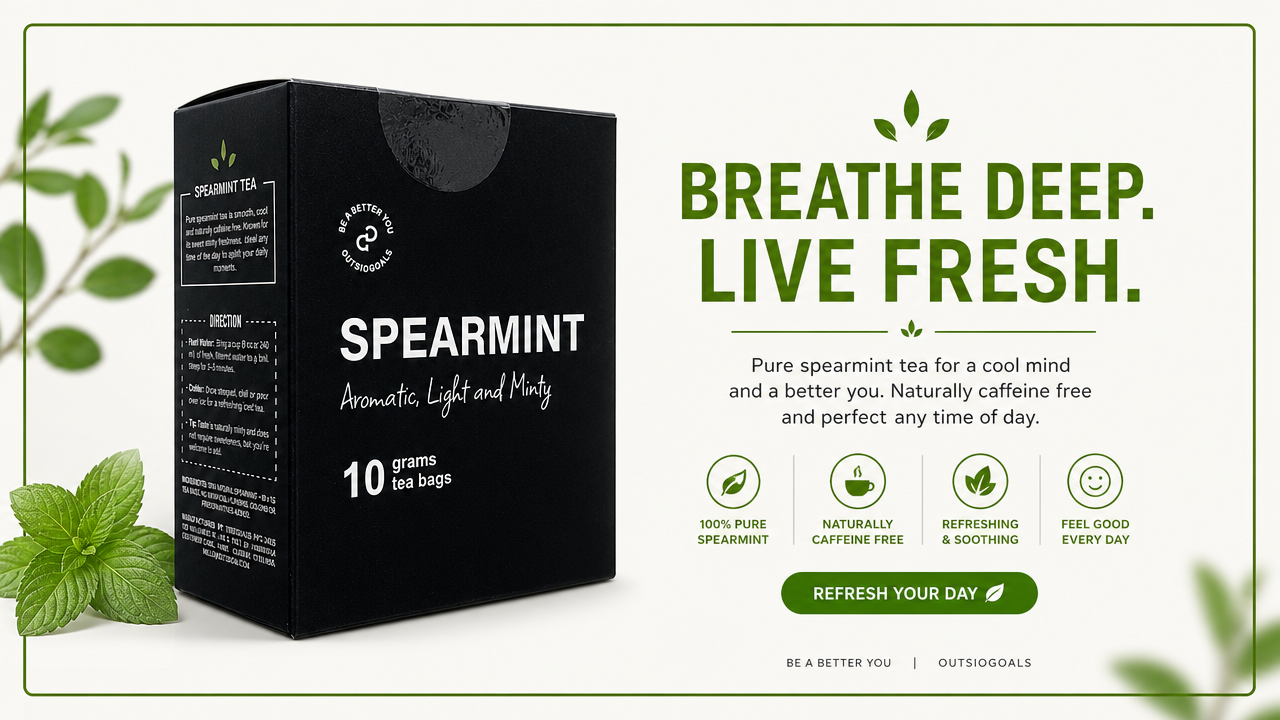
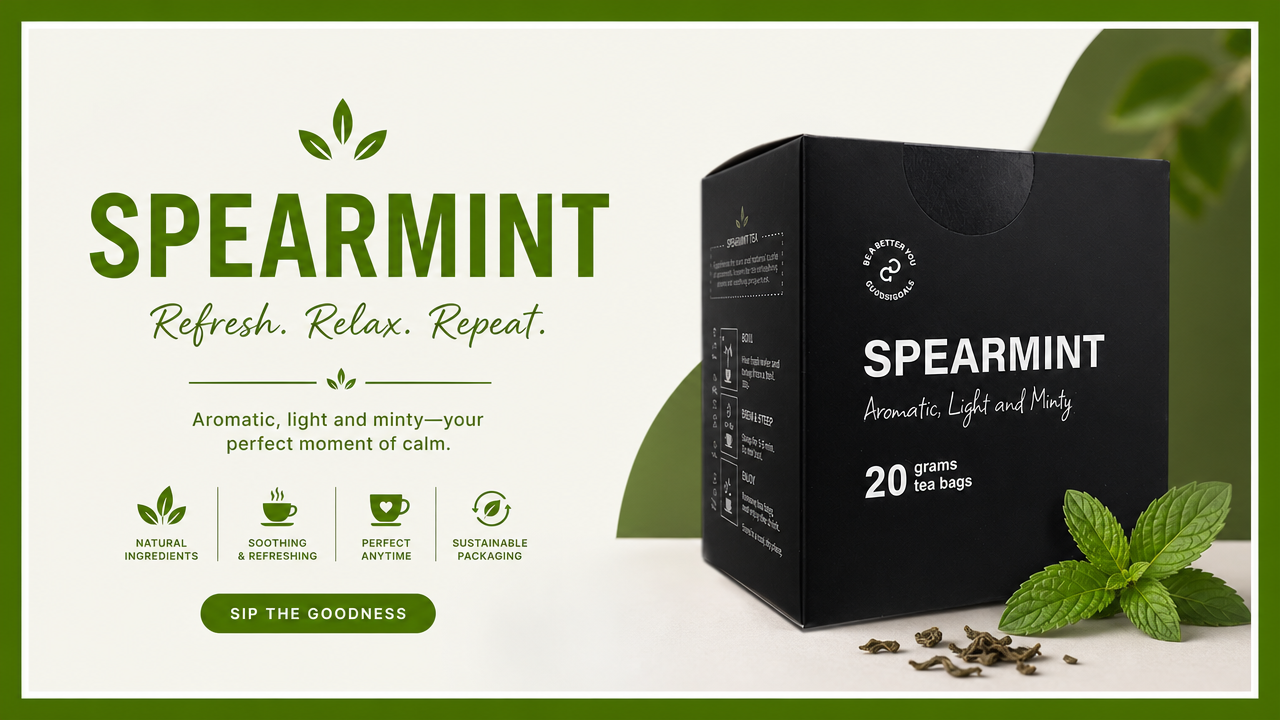
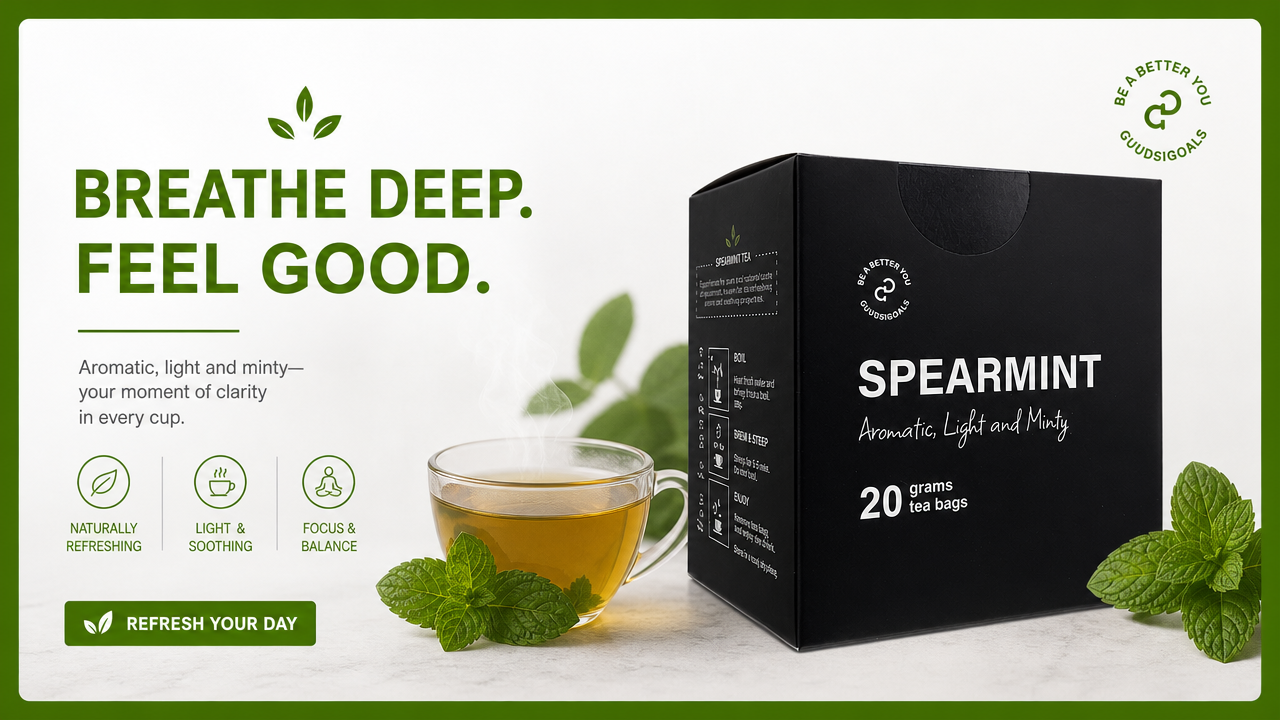
- Choose one ritual: Maybe it’s a daily walk or a nightly cup of spearmint tea.
- Focus on the “Long Game”: Progress with PCOS isn’t about perfection; it’s about the guts to show up for yourself, one day at a time.
Guts To Goals Clarity over confusion. Progress over pressure. Be a Better You.
IMPORTANT NOTE:
The information shared here is for educational and storytelling purposes based on personal experience and research; it is not medical advice, diagnosis, or treatment. If, after reading this, you feel your body is signaling the patterns of PCOS, please do not self-medicate or attempt to self-diagnose. We strongly encourage you to consult with a healthcare professional—an Endocrinologist or OB-GYN is best equipped to provide a formal diagnosis and personalized medical guidance.






Comments
No comments yet. Be the first to share your thoughts!