




Hormonal imbalance doesn’t always present as a single, obvious issue. More often, it shows up as persistent, systemic patterns:
- Energy crashes that defy logic.
- Cycles that lose their consistency.
- Skin that no longer responds to topical intervention.
For many navigating Polycystic Ovary Syndrome (PCOS), these are not isolated symptoms. They are the downstream effects of a single, compromised regulator: Insulin.
INSULIN: The Metabolic Middleman
Insulin is a signaling hormone with a straightforward mandate: move glucose from the bloodstream into your cells to be utilized as energy.
In a PCOS-dominant system, the body frequently develops insulin resistance. This means the cells become “deaf” to the insulin signal, failing to respond efficiently. To compensate, the pancreas overproduces insulin to force a response. Over time, this hyperinsulinemia does more than affect blood sugar—it begins to hijack other biological systems.
When Insulin Drives Hormonal Imbalance
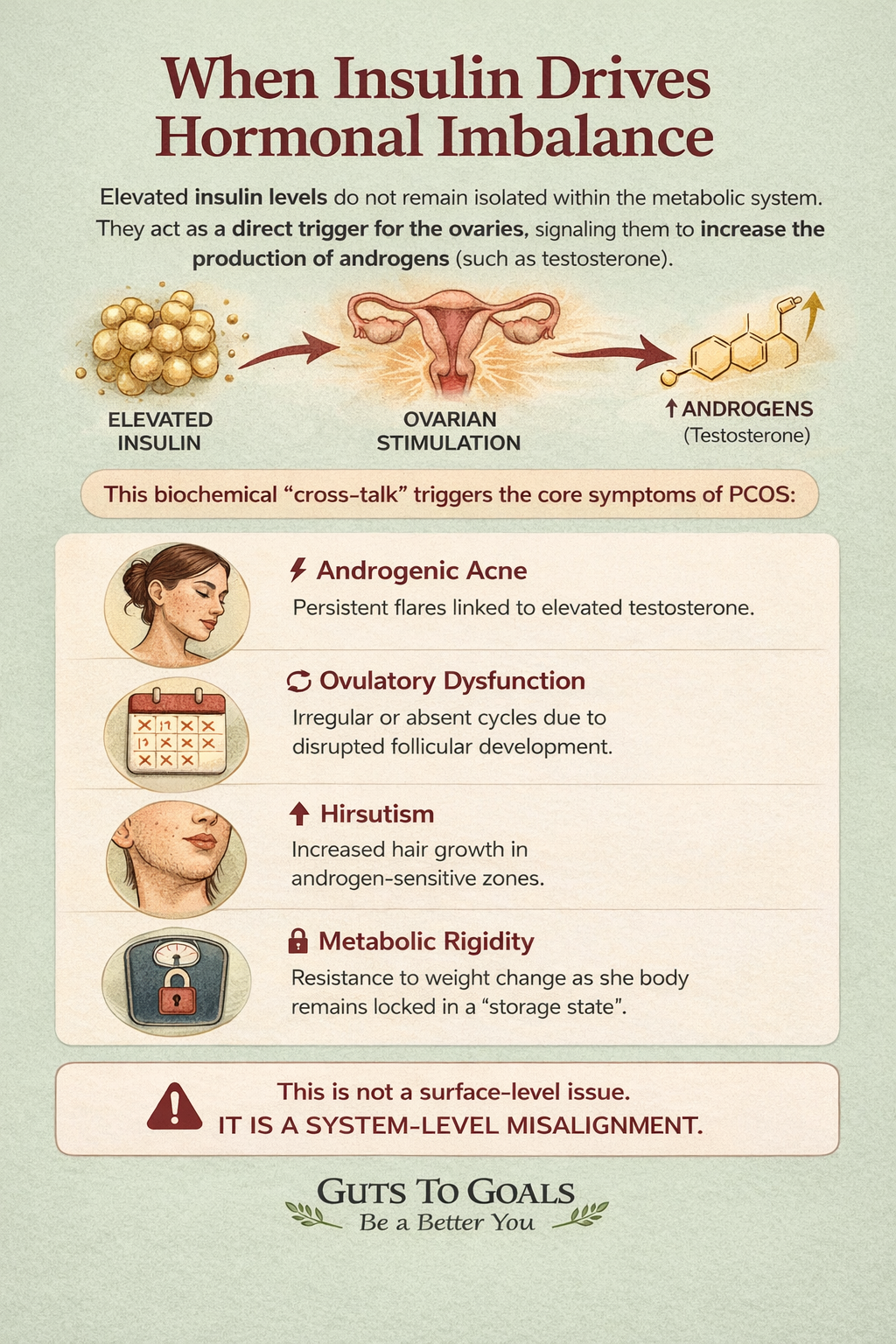
Elevated insulin levels do not remain isolated within the metabolic system. They act as a direct trigger for the ovaries, signaling them to increase the production of androgens (such as testosterone). This biochemical “cross-talk” is the actual driver behind the clinical symptoms of PCOS:
- Androgenic Acne: Persistent flares linked to elevated testosterone.
- Ovulatory Dysfunction: Irregular or absent cycles due to disrupted follicular development.
- Hirsutism: Increased hair growth in androgen-sensitive zones.
- Metabolic Rigidity: Resistance to weight change as the body remains locked in a “storage state.”
This is not a surface-level issue; it is a system-level misalignment.
Why Willpower Isn’t the Solution
Approaching insulin-driven PCOS through restriction or high-intensity exercise alone overlooks the underlying physiology. When insulin remains chronically elevated:
- Lipolysis is Inhibited: Fat breakdown is physically limited, making weight loss biologically difficult.
- Signaling is Compromised: Hunger and satiety cues become unreliable, leading to “cravings” that are actually survival signals.
- Energy is Volatile: Glucose fluctuations lead to dramatic highs and lows.
This isn’t about a lack of effort. It’s about how the body is currently processing—and misinterpreting—signals.
The Guts To Goals Approach: Stabilizing the System
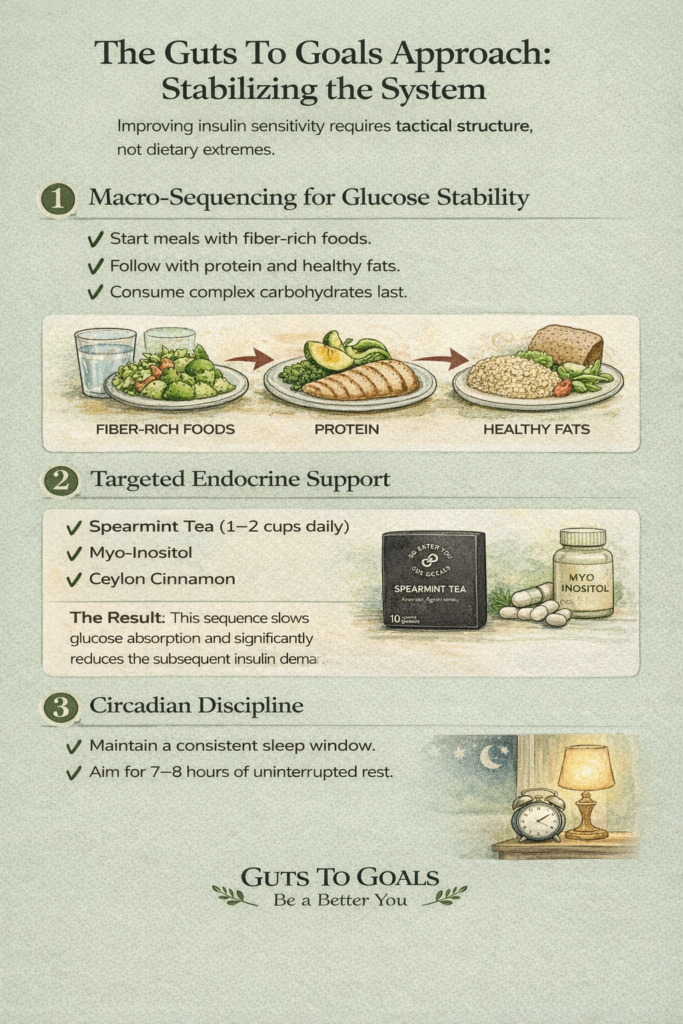
The objective is not a “reset.” It is a consistent recalibration. Improving insulin sensitivity requires tactical structure, not dietary extremes.
1. Macro-Sequencing for Glucose Stability
Blood sugar spikes drive higher insulin output. Reducing the velocity of these spikes is foundational to recovery.
- The Protocol: Begin meals with fiber-rich foods, follow with protein and healthy fats, and consume complex carbohydrates last.
- The Result: This sequence slows glucose absorption and significantly reduces the subsequent insulin demand.
2. Targeted Endocrine Support
Specific, researched ingredients can support hormonal balance while the underlying metabolic dysfunction is being addressed:
- Spearmint Tea (1–2 cups daily): Studied for its role in inhibiting free testosterone synthesis over time.
- Myo-Inositol: Extensively documented for its ability to sensitize the insulin receptor and help restore ovulatory function.
- Ceylon Cinnamon: Associated with improved glucose handling and a moderated insulin response.
3. Circadian Discipline
Sleep has a direct, measurable impact on insulin sensitivity. Even a single night of disrupted sleep can impair glucose metabolism the following day.
- The System: Maintain a consistent sleep window and aim for 7–8 hours of uninterrupted rest to lower systemic cortisol and oxidative stress.
The Shift That Matters
PCOS is often mismanaged as a collection of symptoms to be suppressed. The more effective strategy is to address the system driving those symptoms.
When insulin is stabilized, the “uphill climb” levels out. The body stops fighting against itself, and downstream effects—from skin clarity to cycle regularity—begin to correct. This transition is not immediate, but it is predictable.
Final Perspective
This is not about control or perfection. It’s about understanding the signal your body is responding to and adjusting it at the source.
Consistency over intensity. Structure over guesswork. When the system is properly supported, the body follows.
Guts To Goals
Be a Better You.






Comments
No comments yet. Be the first to share your thoughts!