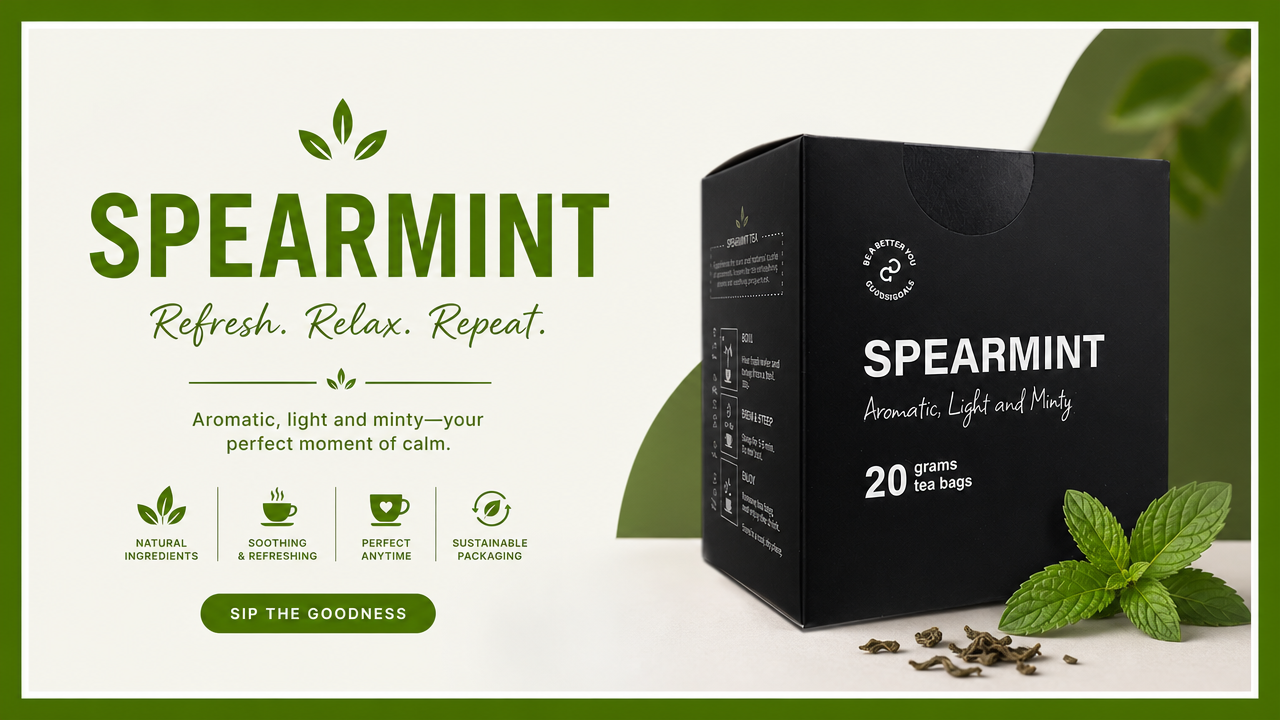
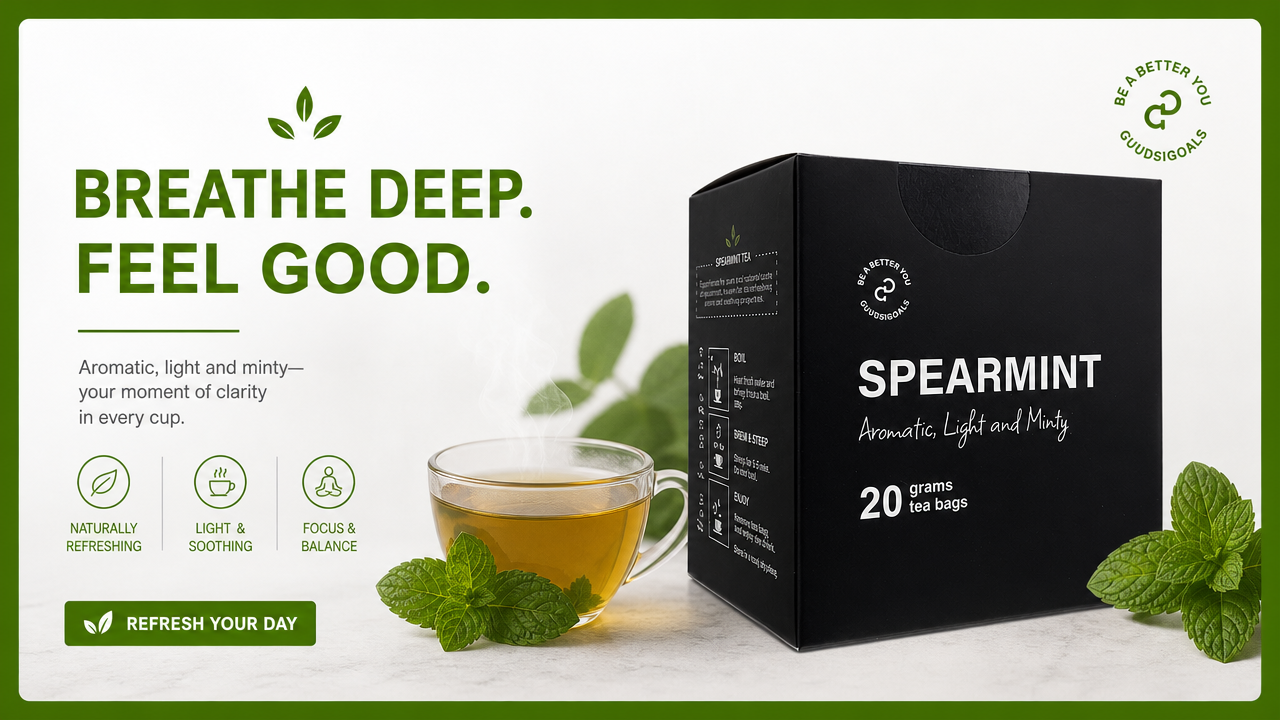

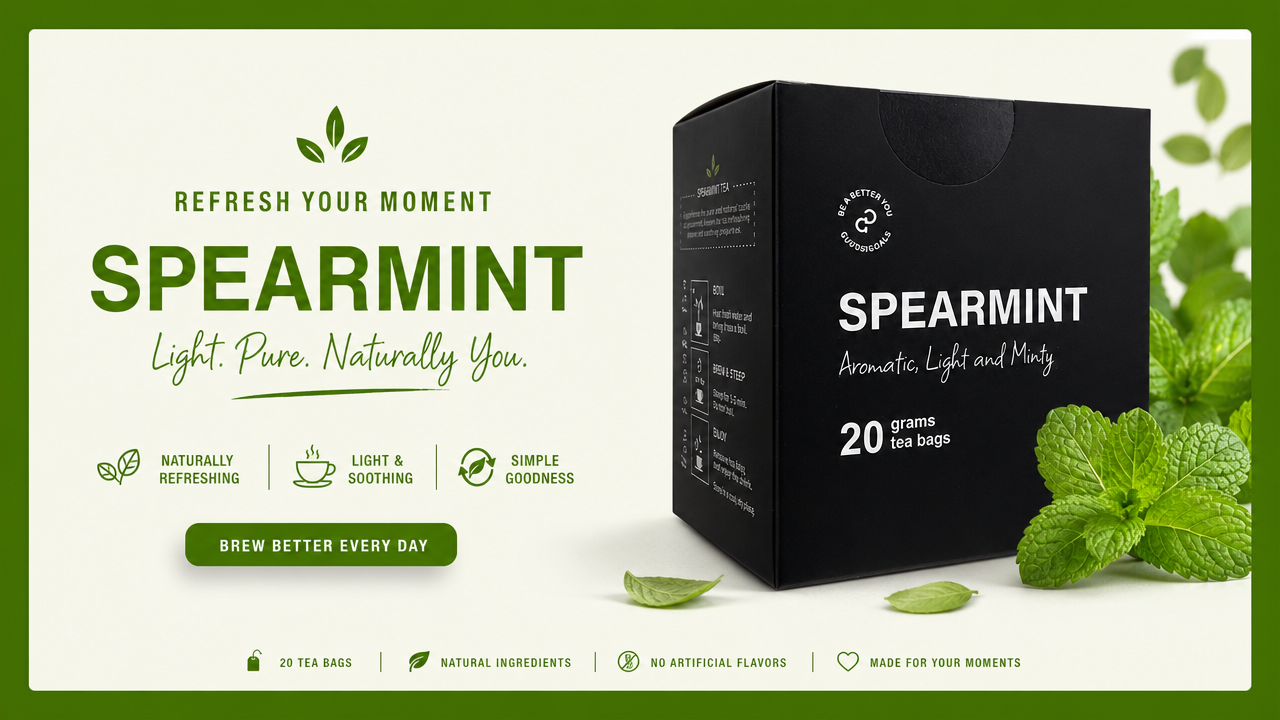




What Is Spearmint?
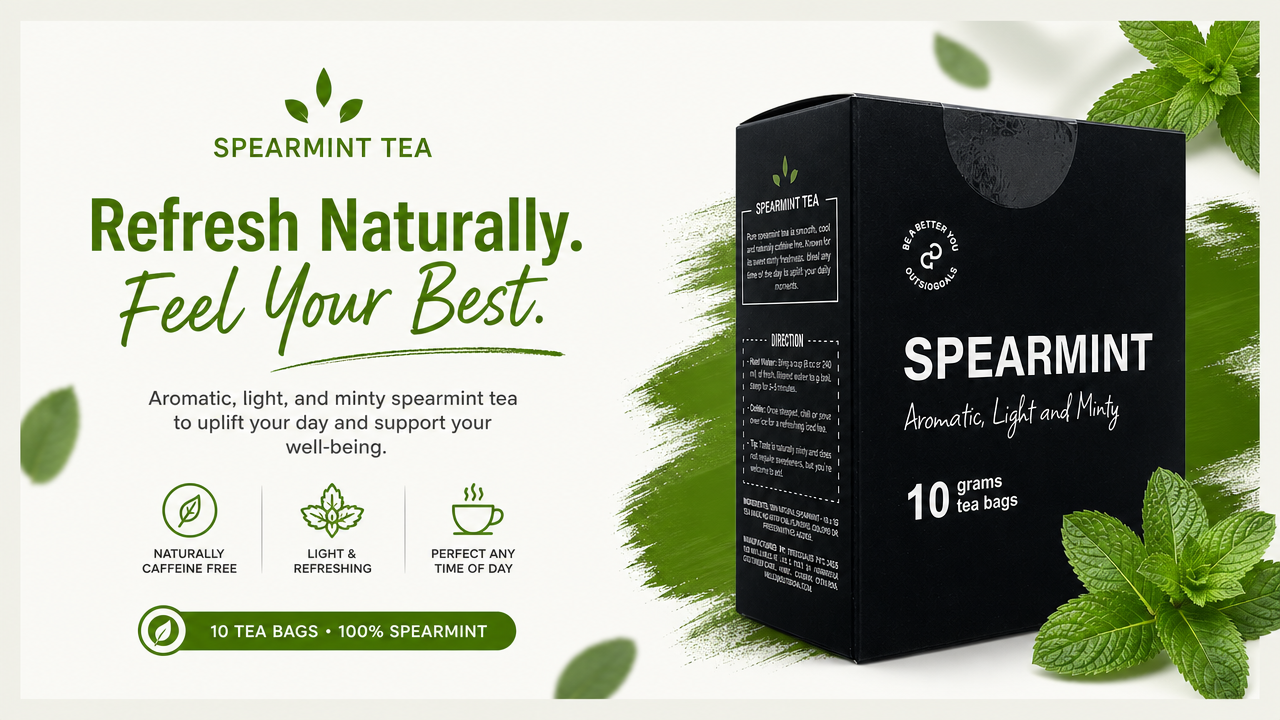
Spearmint (Mentha spicata) is one of the most popular types of mint in the world. It’s known for its fresh, naturally sweet flavor and gentle minty aroma. People have used spearmint for hundreds of years in teas, recipes, and traditional herbal practices.
One of the things that makes spearmint unique is that it contains very little menthol—the compound that gives peppermint its strong cooling sensation. Instead, spearmint gets most of its signature flavor and aroma from a natural plant compound called carvone. That’s why spearmint tastes smoother, sweeter, and less intense than peppermint.
Today, spearmint is grown in many parts of the world. You’ll find it in herbal teas, drinks, salads, desserts, sauces, chewing gum, toothpaste, and even skincare products. In recent years, researchers have also been studying spearmint to better understand its natural plant compounds and how they may support overall wellness.
Whether you’re enjoying a cup of spearmint tea or adding fresh leaves to a meal, this versatile herb has remained a favorite for generations.
Next: Learn about the History of Spearmint and how it became one of the world’s most loved herbs.
Quick Facts
| Scientific Name | Mentha spicata |
|---|---|
| Plant Family | Mint family (Lamiaceae) |
| Also Called | Garden Mint, Common Mint |
| Native To | Europe and parts of Asia (now grown around the world) |
| Main Natural Compound | Carvone |
| Menthol Content | Naturally very low |
| Taste | Smooth, sweet, and refreshing |
| Common Uses | Tea, cooking, drinks, desserts, essential oils, and personal care products |
A Brief History of Spearmint
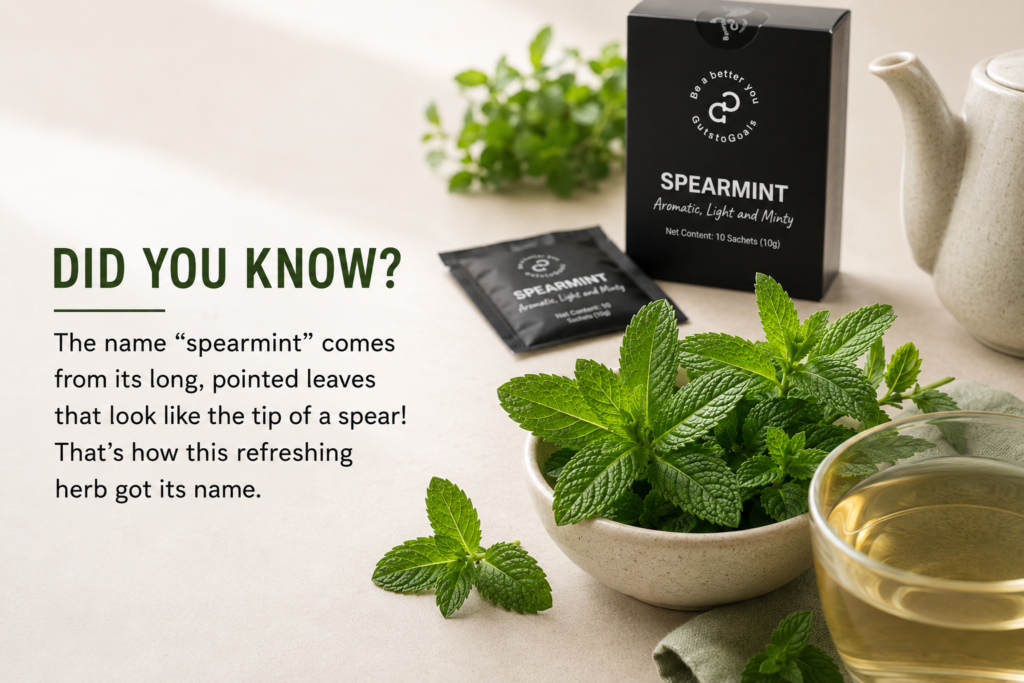
Spearmint has been part of everyday life for thousands of years. Historians believe it first grew naturally in parts of Europe and western Asia before spreading to other regions through trade, travel, and cultivation.
Ancient civilizations, including the Greeks and Romans, valued spearmint for its fresh aroma and pleasant flavor. It was commonly added to foods and drinks, used to freshen homes, and included in traditional herbal practices.
As trade expanded, spearmint found its way across Europe, the Middle East, North Africa, and eventually to many other parts of the world. Today, it is grown on every inhabited continent and is one of the most widely cultivated mint varieties.
While spearmint has a long history in traditional use, modern researchers are now studying its natural plant compounds—such as carvone and rosmarinic acid—to better understand their potential role in overall wellness.
Today, people continue to enjoy spearmint in many of the same ways: as a refreshing tea, a flavorful culinary herb, and a naturally aromatic plant that has stood the test of time.
Next: Discover how Spearmint compares with Peppermint and other mint plants.
Timeline
🌱 Around 2,000+ years ago
Spearmint grows naturally in parts of Europe and western Asia.
🏛 Ancient Greece & Rome
Used in cooking, drinks, and traditional herbal practices.
🚢 Middle Ages to the Age of Exploration
Spread to new regions through trade and cultivation.
🌍 Today
Grown around the world for tea, food, essential oils, and wellness products.
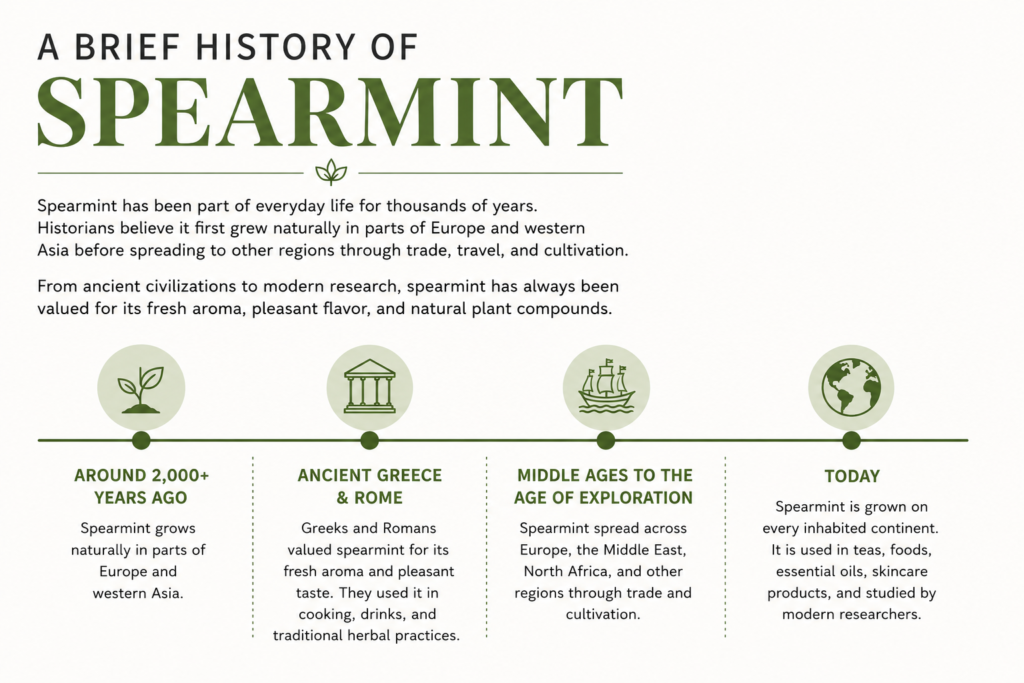
Did You Know?
The name Mentha, the scientific genus for all mint plants, comes from Minthe, a figure in Greek mythology. According to the legend, Minthe was transformed into a fragrant herb, giving rise to the name that scientists still use for the mint family today.
Spearmint vs. Other Mint Plants
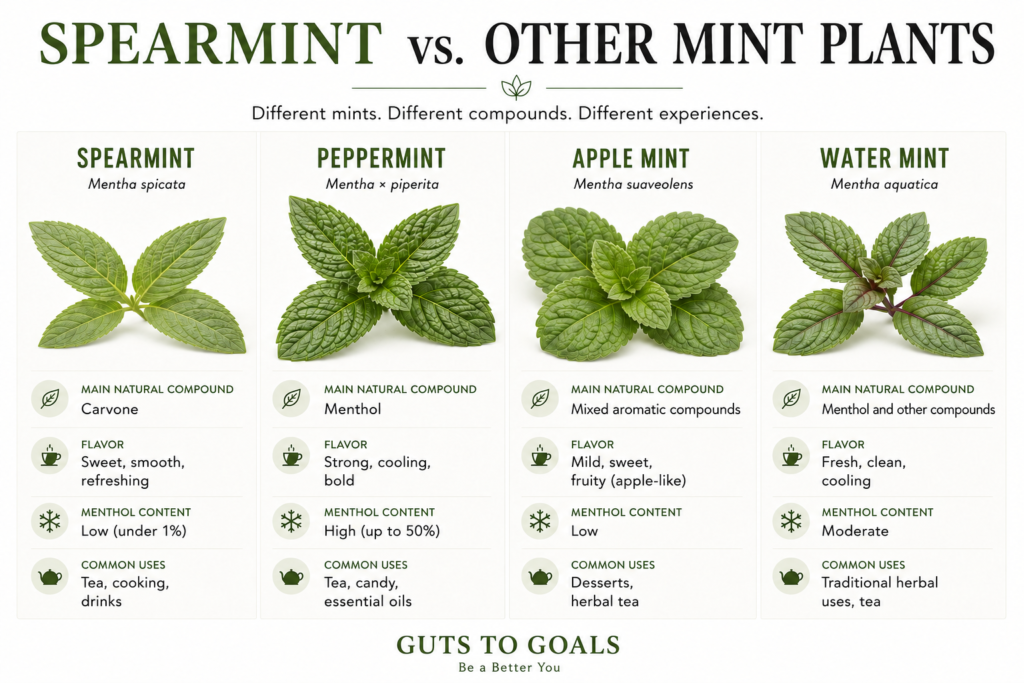
Not all mint plants taste or smell the same. While they belong to the same plant family, each variety has its own flavor, aroma, and natural plant compounds.
Spearmint is known for its smooth, naturally sweet flavor and gentle minty aroma. Peppermint, on the other hand, has a much stronger cooling sensation because it contains more menthol. Other types of mint, such as apple mint and water mint, also have their own unique characteristics and are used in different ways.
One of the biggest differences is the main natural compound found in each plant. Spearmint is naturally rich in carvone, while peppermint is rich in menthol. These compounds help explain why the two herbs taste and smell so different.
Here’s a quick comparison:
| Mint Variety | Main Natural Compound | Flavor | Common Uses |
|---|---|---|---|
| Spearmint | Carvone | Sweet, smooth, refreshing | Tea, cooking, drinks |
| Peppermint | Menthol | Strong, cooling, bold | Tea, candy, essential oils |
| Apple Mint | Mixed aromatic compounds | Mild and fruity | Desserts, herbal tea |
| Water Mint | Menthol and other compounds | Earthy and fresh | Traditional herbal uses |
| Corn Mint | High menthol | Very strong and cooling | Menthol products and essential oils |
Every type of mint has something unique to offer. The best choice depends on how you plan to use it. If you’re looking for a gentler mint with a naturally sweet flavor, spearmint is a popular choice. If you enjoy a stronger cooling sensation, peppermint may be a better fit.
Did You Know?
Although spearmint and peppermint appear similar, they are distinct plants with different natural compounds. That’s why two cups of mint tea can have noticeably different flavors, even though they’re both made from herbs in the mint family.
What Makes Spearmint Different?
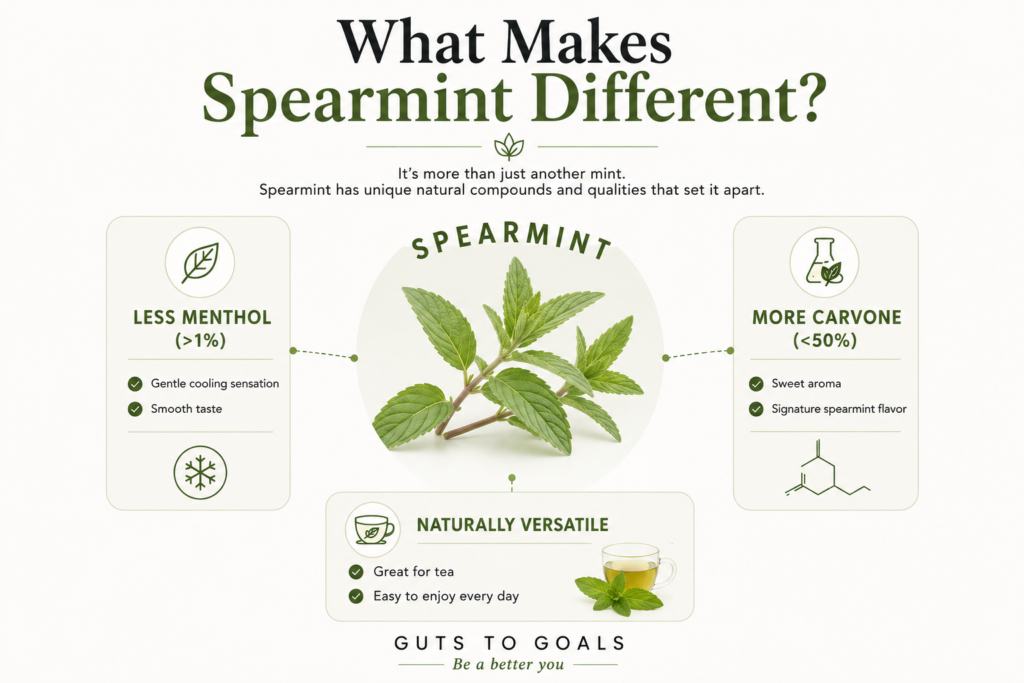
At first glance, many mint plants look alike. But once you smell or taste them, you’ll quickly notice that each one has its own personality.
One of the biggest things that sets spearmint apart is its natural plant compounds. While peppermint is rich in menthol—the compound responsible for its strong cooling sensation—spearmint contains much less menthol. Instead, it is naturally rich in carvone.
Carvone is the compound that gives spearmint its smooth, sweet, and refreshing aroma. It’s the reason spearmint tastes milder than peppermint and doesn’t leave the same intense cooling feeling in your mouth.
Another reason spearmint stands out is its versatility. Its gentle flavor makes it easy to enjoy on its own as a tea, while also pairing well with fruits, vegetables, desserts, and savory dishes.
Researchers are also interested in spearmint because it contains other naturally occurring plant compounds, including antioxidants such as rosmarinic acid and several flavonoids. Scientists continue to study these compounds to better understand their potential role in supporting overall wellness.
Together, these natural characteristics make spearmint much more than just “another mint.” Its unique combination of flavor, aroma, and plant compounds has made it a favorite for both everyday enjoyment and scientific research.
Next: Discover what carvone is and why it’s considered one of spearmint’s most important natural compounds.
What Is Carvone?
One of the reasons spearmint has its unique flavor is a natural plant compound called carvone.
Carvone is found in the essential oils of several plants, but it’s especially abundant in spearmint. It gives spearmint its fresh, naturally sweet aroma and smooth minty taste. Without carvone, spearmint wouldn’t smell or taste the way we know it today.
Interestingly, carvone is also found in caraway seeds, but in a different natural form. That’s why caraway has a warm, spicy aroma while spearmint smells cool and refreshing. Even though the compound is called carvone in both plants, its structure is arranged slightly differently, creating two very different scents.
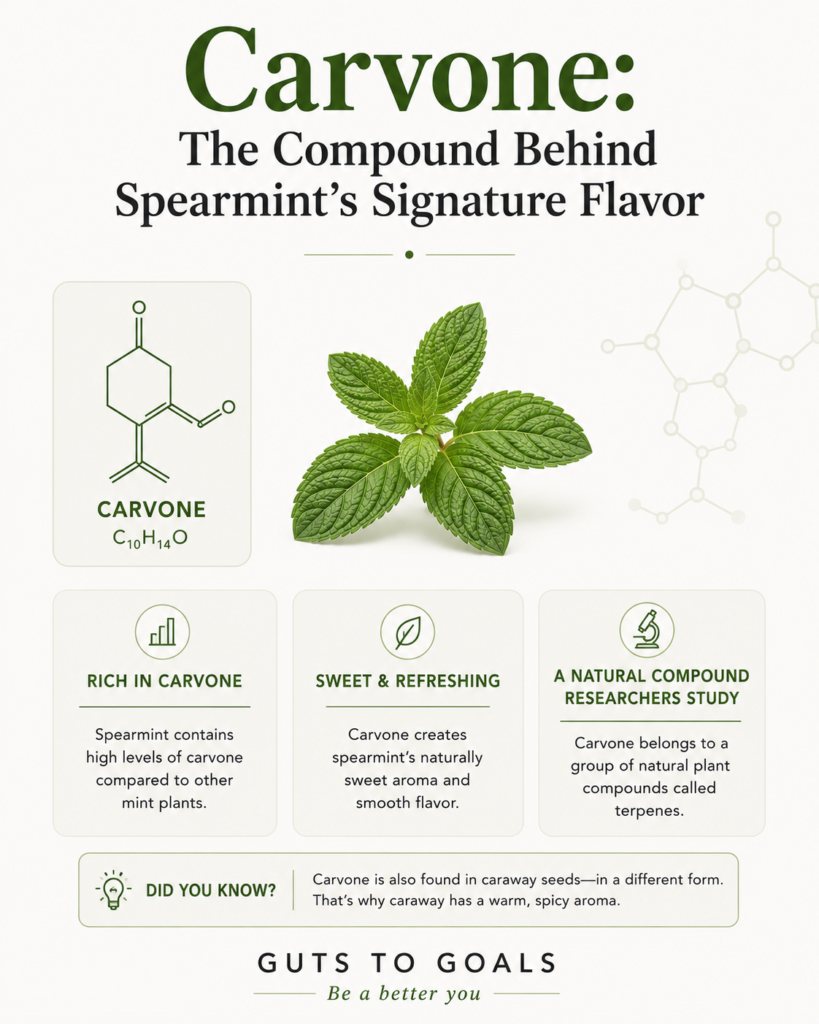
Researchers are interested in carvone not only because it shapes the flavor of spearmint, but also because it belongs to a group of natural plant compounds called terpenes. Scientists continue to study terpenes to better understand the roles they play in plants and their potential contribution to overall wellness.
While carvone is the signature compound of spearmint, it doesn’t work alone. Spearmint also contains other naturally occurring compounds, such as rosmarinic acid, limonene, and several flavonoids, which together give the herb its distinctive aroma, flavor, and antioxidant properties.
Next: Explore the other natural compounds found in spearmint and how they work together.
Other Natural Compounds in Spearmint
Carvone may be the most well-known compound in spearmint, but it’s only one part of the story. Like many herbs, spearmint contains a variety of naturally occurring plant compounds that work together to create its aroma, flavor, and antioxidant properties.
Here are some of the other important compounds found in spearmint:
Rosmarinic Acid
Rosmarinic acid is a natural antioxidant found in many herbs in the mint family. Researchers are studying how antioxidants help protect cells from oxidative stress, which is a normal process that happens in the body every day.
Limonene
Limonene is a naturally occurring compound also found in citrus fruits. In spearmint, it adds subtle fresh, citrus-like notes that complement carvone and contribute to the herb’s refreshing aroma. It is being studied for metabolic support and for lowering inflammatory chemicals (cytokines). It is also known for easing digestive discomfort.
Flavonoids
Flavonoids are a group of natural plant compounds found in fruits, vegetables, tea, and herbs. They are best known for their antioxidant properties and continue to be studied for their role in supporting overall wellness. In spearmint, the flavonoids are known to help trap or reduce free radicals.
Other Terpenes
Spearmint also contains small amounts of other natural terpenes that help shape its unique aroma and flavor. Although they are present in lower amounts than carvone (also a terpene), they contribute to the plant’s distinctive character. They give spearmint its calming effect and some anti-microbial benefit.
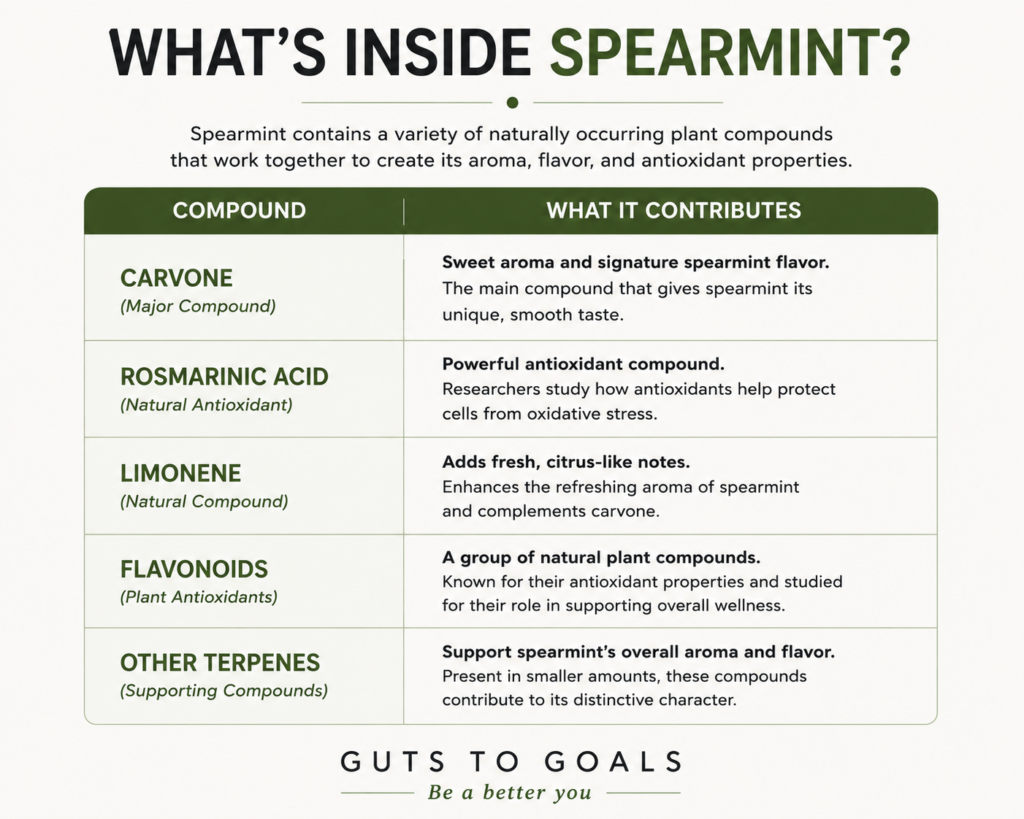
Rather than relying on a single compound, spearmint’s unique qualities come from the combination of many naturally occurring plant compounds working together.
Next: Explore the potential benefits researchers are studying in spearmint.
Potential Benefits Researchers Are Studying
Spearmint has been used for centuries in traditional herbal practices. Today, researchers continue to study its naturally occurring plant compounds to better understand how they may support overall wellness.
While research is ongoing, here are some of the areas scientists are exploring:
Antioxidant Support
Spearmint contains natural antioxidants, including rosmarinic acid and flavonoids. These compounds help protect cells from oxidative stress, a normal process that happens in the body every day.
Hormonal Health
One of the most studied areas is spearmint’s potential role in supporting hormonal balance, particularly in women. While early research is promising, more studies are needed to better understand its long-term effects.
Cognitive Function
Some studies are exploring whether compounds found in spearmint may help support memory, attention, and mental performance. This is an active area of research, especially among older adults.
Digestive Comfort
Spearmint has traditionally been enjoyed after meals because of its refreshing flavor. Researchers continue to explore its role in digestive comfort and overall gut wellness.
Oral Health
Thanks to its refreshing aroma and natural plant compounds, spearmint has long been used in products such as toothpaste, mouthwash, and chewing gum. Researchers continue to study its role in supporting oral health.
Naturally Caffeine-Free
Unlike coffee or traditional tea, spearmint contains no caffeine. Many people enjoy it as a calming herbal tea, especially in the evening or as part of a relaxing daily routine.

Research on spearmint continues to grow, but it’s important to remember that no single food or herb is a cure-all. A balanced diet, regular physical activity, quality sleep, and healthy lifestyle habits remain the foundation of overall wellness.
Next: Learn how spearmint is enjoyed around the world as a refreshing herbal tea.
Ways to Enjoy Spearmint Tea
Spearmint tea is simple, refreshing, and easy to enjoy in many different ways. Whether you prefer a warm cup in the evening or a cold drink on a sunny day, there’s a style to suit every taste.
Here are some popular ways to enjoy spearmint tea:
Hot Tea
Steep dried or fresh spearmint leaves in hot water for a smooth, naturally refreshing herbal tea. Enjoy it plain or add a slice of lemon or a little honey if you prefer.
Iced Tea
Brew spearmint tea as usual, let it cool, then pour it over ice. It’s a refreshing caffeine-free drink that’s perfect for warm days.
Cold Brew
For a milder flavor, steep spearmint leaves in cold water and refrigerate for several hours. Cold brewing creates a smooth, refreshing tea with very little bitterness.
Tea Blends
Spearmint pairs well with herbs such as chamomile, hibiscus, lemongrass, and ginger. Blending herbs creates new flavors while keeping spearmint as the refreshing base.
Quick Guide
| Way to Enjoy | Best For |
|---|---|
| Hot Tea | Cozy mornings or relaxing evenings |
| Iced Tea | Refreshing drink on warm days |
| Cold Brew | Smooth, mild flavor |
| Tea Blends | Trying new herbal flavors |
| Recipes | Adding freshness to everyday meals |
In Everyday Recipes
Beyond tea, fresh spearmint leaves can be added to salads, smoothies, fruit bowls, yogurt, and infused water for an extra burst of freshness.
No matter how you enjoy it, spearmint offers a simple and refreshing way to add more herbs to your daily routine.
Next: Discover how spearmint is used in kitchens around the world.
Spearmint in Everyday Cooking
While spearmint is best known as a refreshing herbal tea, it’s also a versatile herb used in kitchens around the world. Its naturally sweet, mild flavor makes it easy to add to both sweet and savory dishes.
Here are some popular ways to use fresh spearmint:
Salads
Fresh spearmint adds a bright, refreshing flavor to green salads, fruit salads, and grain bowls.
Smoothies
Blend a few fresh leaves into your favorite smoothie for a naturally cool and refreshing taste.
Infused Water
Add spearmint leaves to cold water with lemon, cucumber, or berries for a simple flavored drink.
Yogurt and Desserts
Spearmint pairs well with yogurt, fresh fruit, chocolate, and citrus-based desserts.
Main Dishes
Many Mediterranean and Middle Eastern recipes use spearmint in sauces, marinades, rice dishes, and meat recipes to add freshness without overpowering other ingredients.
One of the reasons spearmint is so popular is its gentle flavor. Unlike stronger mint varieties, it complements many foods without taking over the dish.

Next: Learn about the safety and common questions people have about spearmint.
Is Spearmint Safe?
For most healthy adults, spearmint is generally considered safe when enjoyed as a food or herbal tea as part of a balanced diet.
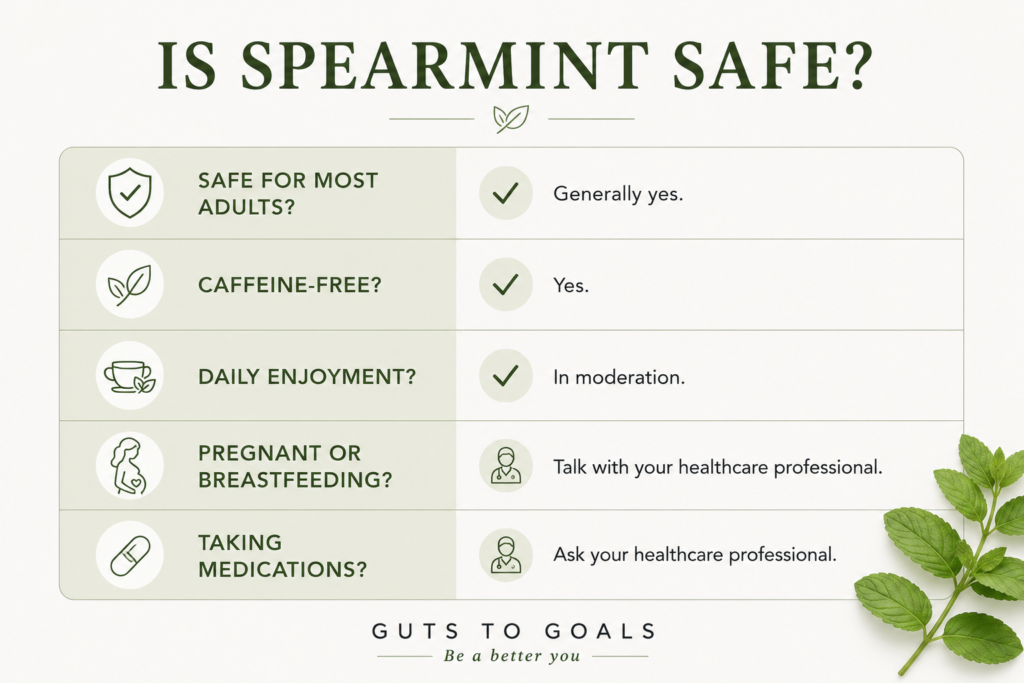
Like any herb, however, it’s best to enjoy spearmint in moderation. Individual needs can vary, and some people may respond differently from others.
If you are pregnant, breastfeeding, taking prescription medications, or have a medical condition, it’s a good idea to speak with a healthcare professional before making significant changes to your diet or herbal routine.
If you’re trying spearmint for the first time, start with a small amount and see how your body responds.
Most people simply enjoy spearmint for its naturally refreshing flavor and as a caffeine-free herbal tea that fits easily into an everyday wellness routine.
Next: Frequently Asked Questions about spearmint.
Choosing Quality Spearmint
Not all spearmint products are the same. Here are a few simple things to look for when choosing fresh spearmint or spearmint tea.
100% Pure Spearmint
Choose products made with only spearmint leaves.
This helps ensure you’re getting the herb’s natural flavor and aroma without unnecessary fillers or additives.
Fresh Aroma
Quality spearmint should smell clean, sweet, and refreshing.
A fresh aroma is a good sign that the herb has been stored and handled properly.
Properly Sealed Packaging
Choose products in airtight, opaque, well-sealed packaging.
Proper packaging helps protect the leaves from moisture, light, and air, preserving freshness over time.
Clear Ingredient List
Read the label before you buy.
A clear ingredient list lets you know exactly what’s in the product and helps you avoid unwanted ingredients.
Transparent Brand
Choose brands that are open about their ingredients and quality standards.
Transparent brands are more likely to provide consistent quality, proper handling, and accurate product information.
Choosing quality spearmint helps you enjoy its natural flavor, aroma, and freshness in every cup.
How to Store Spearmint
Proper storage helps preserve spearmint’s natural aroma and flavor.
Here are a few simple tips:
Keep It Airtight
Store dried spearmint in an airtight container.
This helps protect it from air and moisture.
Keep It Cool and Dry
Store it in a cool, dry place away from direct sunlight.
Heat, light, and humidity can reduce its freshness over time.
Avoid Strong Odors
Keep spearmint away from strongly scented foods and spices.
Dried herbs can absorb surrounding odors.
Use Fresh Leaves Promptly
Fresh spearmint is best enjoyed within a few days when refrigerated.
For longer storage, it can be frozen or dried.
With proper storage, spearmint stays fresh, flavorful, and ready to enjoy whenever you need it.
Final Thoughts
Spearmint has been enjoyed for centuries for its refreshing flavor, pleasant aroma, and versatility. Today, it continues to be appreciated as a naturally caffeine-free herb that can be enjoyed as a tea, used in cooking, and studied for its unique plant compounds.
Whether you’re learning about carvone, exploring current research, or simply looking for a refreshing herbal drink, spearmint offers a simple way to enjoy one of nature’s most well-known herbs.
As research continues, our understanding of spearmint will continue to grow. In the meantime, choosing high-quality spearmint and enjoying it as part of a balanced lifestyle is a great place to start.
We hope this guide has helped you better understand what makes spearmint unique. If you’d like to learn more, explore our articles below for in-depth guides on specific topics.
Frequently Asked Questions
What is spearmint?
Spearmint (Mentha spicata) is a fragrant herb known for its naturally sweet, refreshing flavor and aroma. It’s commonly enjoyed as a herbal tea and culinary herb.
Is spearmint the same as peppermint?
No. Spearmint and peppermint are different mint varieties. Spearmint is naturally richer in carvone, while peppermint contains more menthol, giving it a stronger cooling sensation.
Does spearmint contain caffeine?
No. Pure spearmint is naturally caffeine-free.
What does spearmint taste like?
Spearmint has a smooth, mildly sweet, and refreshing mint flavor.
What is carvone?
Carvone is the main natural compound responsible for spearmint’s signature aroma and flavor. Early lab studies published in journals like PubMed show that carvone—especially from spearmint—can block androgen receptors and suppress specific genetic pathways (like SREBP1 and TLR4) to stop the body from overproducing testosterone. This helps balance reproductive hormones, regulates metabolic disturbances, and even protects against PCOS-related heart issues
Can I drink spearmint tea every day?
Many people enjoy spearmint tea daily as part of a balanced diet. If you have a medical condition, are pregnant, breastfeeding, or take medications, consult your healthcare professional.
Can I drink spearmint tea hot or cold?
Yes. Spearmint tea can be enjoyed hot, iced, or cold brewed.
Is spearmint only used for tea?
No. Spearmint is also used in cooking, desserts, smoothies, infused water, sauces, and salads.
How should I store spearmint?
Store dried spearmint in an airtight container in a cool, dry place away from heat, light, and moisture
What makes spearmint different from other mint plants?
Its naturally high carvone content gives spearmint its sweeter, smoother flavor and gentler cooling sensation
What compounds are found in spearmint?
Some of the best-known compounds include carvone, rosmarinic acid, limonene, flavonoids, and other terpenes.
Where can I learn more?
Explore our detailed guides on spearmint history, carvone, brewing methods, research, recipes, and comparisons with other mint varieties.







Comments
No comments yet. Be the first to share your thoughts!