










Everything you need to know about Polyendocrine Metabolic Ovarian Syndrome (PMOS), formerly known as Polycystic Ovary Syndrome (PCOS).
Welcome
If you’ve recently been told you have PMOS or you’ve always known it as PCOS, you’re probably wondering why the name changed and what it means for your health.
The good news is that PMOS and PCOS refer to the same condition. The change in terminology reflects a better understanding of what this condition truly is. While the ovaries can be affected, research over the past several decades has shown that the condition involves much more than the ovaries alone. It is a complex hormonal and metabolic syndrome that can influence menstrual cycles, fertility, skin health, energy levels, body weight, and long-term metabolic health.
PMOS affects an estimated 1 in 8 women of reproductive age, making it one of the most common endocrine conditions worldwide. Yet despite how common it is, many people go years without receiving a diagnosis or fully understanding why they experience symptoms such as irregular periods, acne, excessive facial hair, weight changes, difficulty becoming pregnant, or persistent fatigue.
Adding to the confusion, no two people with PMOS experience the condition in exactly the same way. Some may have regular body weight but struggle with acne or irregular periods. Others may experience insulin resistance, unwanted hair growth, or challenges with fertility. This variation is one reason experts now recognize that the old name, Polycystic Ovary Syndrome, doesn’t accurately describe everyone living with the condition.
This guide was created to help you understand PMOS using clear, evidence-based information without overwhelming medical jargon. Whether you’re newly diagnosed, supporting someone you care about, or simply looking for reliable answers, you’ll find practical information about:
- What PMOS is and why the name changed
- Common signs and symptoms
- Possible causes and risk factors
- How healthcare professionals diagnose PMOS
- The different PMOS presentations
- Nutrition, exercise, sleep, and lifestyle strategies
- What current research says about natural approaches, including spearmint tea and matcha
- Frequently asked questions from women living with PMOS
Our goal is simple: to help you understand your body better so you can make informed decisions alongside your healthcare provider.
What You’ll Learn in This Guide
By the end of this article, you’ll understand:
- Why PCOS is now increasingly referred to as PMOS
- Why ovarian cysts are only one part of the condition
- How hormones and metabolism are closely connected
- The symptoms to watch for
- The latest evidence on diagnosis and management
- Lifestyle habits that may help support overall hormonal and metabolic health
You’ll also find links throughout this guide to more detailed articles if you’d like to explore specific topics in greater depth.
Before We Begin…
One important reminder: PMOS is not your fault.
It isn’t caused by a lack of willpower, eating one particular food, or missing a few workouts. PMOS is a complex condition influenced by genetics, hormones, metabolism, and environmental factors. While there is currently no cure, many people are able to manage their symptoms successfully through a combination of healthy lifestyle habits, appropriate medical care, and ongoing support.
Learning about PMOS is one of the first and most empowering steps you can take.
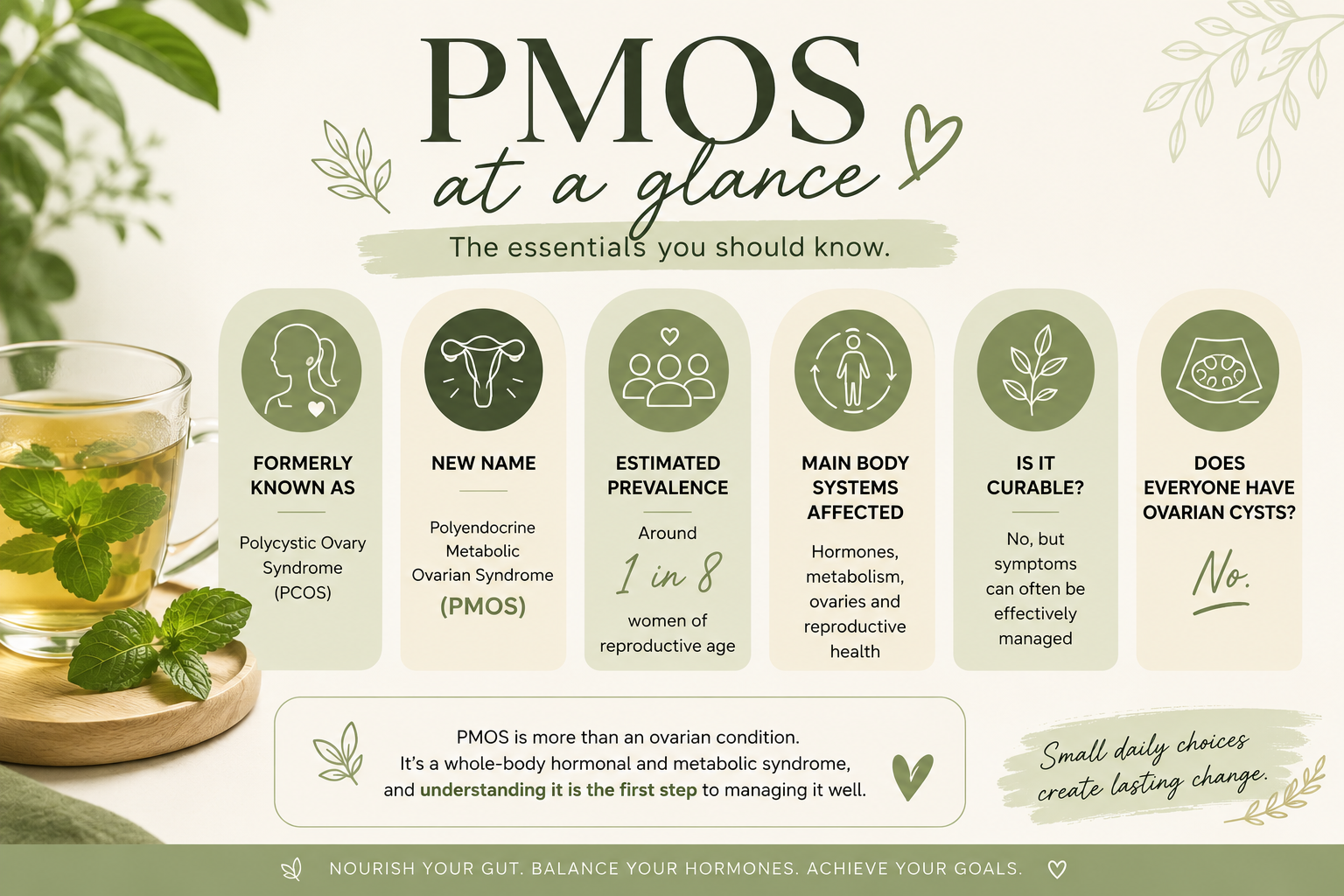
PMOS at a glance
What is PMOS?
Polyendocrine Metabolic Ovarian Syndrome (PMOS), formerly known as Polycystic Ovary Syndrome (PCOS), is a complex hormonal and metabolic condition that affects multiple systems throughout the body. Although it can involve the ovaries and menstrual cycle, it is not solely an ovarian disorder. PMOS may also influence hormone production, insulin regulation, metabolism, fertility, skin health, and long-term cardiovascular and metabolic well-being.
One of the reasons PMOS can be confusing is that it doesn’t look the same for everyone. Some women experience irregular or absent menstrual periods, while others have acne, excessive facial or body hair, difficulty losing weight, or challenges becoming pregnant. Some have polycystic-appearing ovaries on ultrasound, while others do not. This wide variation means that no single symptom defines PMOS.
Researchers now understand that PMOS is an endocrine disorder, meaning it affects the body’s hormone-producing glands. Hormones act as chemical messengers that regulate important functions such as the menstrual cycle, ovulation, metabolism, blood sugar, and reproduction. When these hormones become imbalanced, a range of symptoms can develop.
For many women, insulin resistance is also part of the condition. Insulin is the hormone that helps move glucose (sugar) from the bloodstream into the body’s cells for energy. When the body becomes less responsive to insulin, it may produce higher levels to compensate. These elevated insulin levels can stimulate the ovaries to produce more androgens, often referred to as “male hormones”, which may contribute to irregular ovulation, acne, and excessive hair growth.
Because PMOS affects several interconnected body systems, healthcare professionals increasingly view it as a condition that extends beyond reproductive health alone. Understanding these connections is important, as early diagnosis and appropriate management can help reduce symptoms and support long-term health.
While there is currently no cure for PMOS, many women successfully manage the condition through a combination of healthy lifestyle habits, appropriate medical care, and ongoing monitoring. Learning how PMOS works is the first step toward making informed decisions about your health.
Key Takeaway: PMOS is not simply an ovarian condition. It is a whole-body hormonal and metabolic syndrome that can affect the endocrine, reproductive, and metabolic systems in different ways from one person to another.
Why Did PCOS Become PMOS?
For decades, the condition now known as PMOS was called Polycystic Ovary Syndrome (PCOS). While this name has been widely recognized by both healthcare professionals and the public, many experts believe it no longer reflects what we have learned about the condition over the past several decades.
The term “polycystic ovary syndrome” focuses attention on the ovaries and the small fluid-filled follicles that may appear during an ultrasound examination. However, researchers now understand that these ovarian changes are only one possible feature of the condition, not its defining characteristic.
In fact, many women diagnosed with PCOS do not have polycystic ovaries, while some women without the condition may have polycystic-appearing ovaries on ultrasound. This means that ovarian appearance alone cannot confirm or rule out the diagnosis.
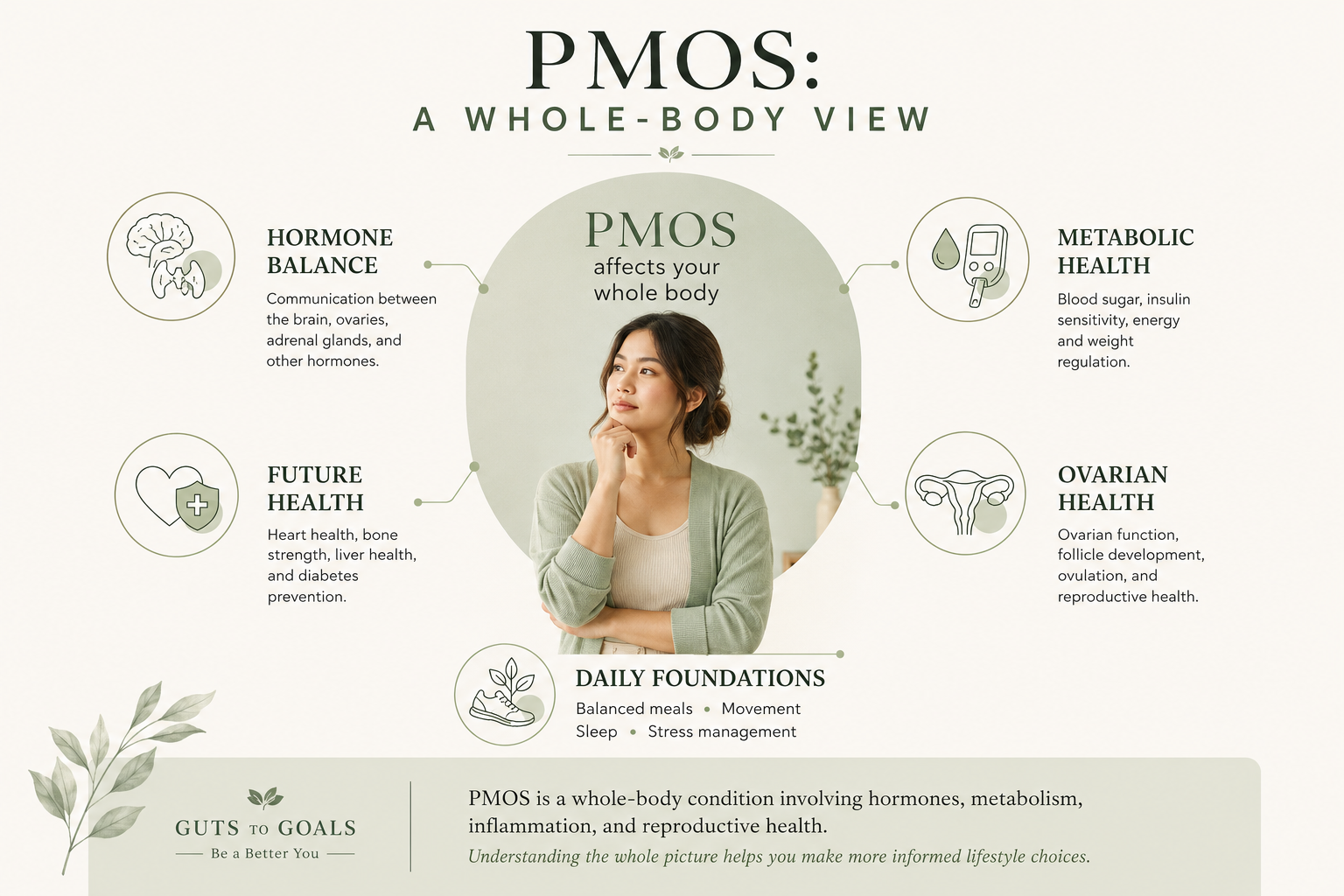
More importantly, scientists now recognize that the condition affects multiple body systems, including:
- The endocrine system, which regulates hormones throughout the body.
- The metabolic system, which influences how the body uses energy and responds to insulin.
- The reproductive system, which affects ovulation, menstrual cycles, and fertility.
- The ovaries, where hormonal changes may interfere with normal egg development and ovulation.
This broader understanding has led researchers and professional organizations to reconsider whether the name PCOS accurately represents the condition.
The proposed term Polyendocrine Metabolic Ovarian Syndrome (PMOS) reflects this more comprehensive view:
| PMOS Component | What It Means |
|---|---|
| Poly | Involving multiple body systems rather than a single organ. |
| Endocrine | Refers to the hormone-producing glands that regulate reproduction, metabolism, and many other body functions. |
| Metabolic | Recognizes that insulin resistance, blood sugar regulation, and energy metabolism are often important parts of the condition. |
| Ovarian | Acknowledges that the ovaries remain an important part of the syndrome, particularly regarding ovulation and reproductive health. |
| Syndrome | Indicates a group of related signs and symptoms that can vary from one person to another. |
Although PCOS remains the official term used in many clinical guidelines and healthcare settings today, the proposed name PMOS reflects an evolving understanding of the condition. The goal is not to change the disease itself, but to use terminology that better describes its complexity and reduces common misconceptions.
For patients, this shift is also an important reminder that PMOS is not simply an ovarian condition. It is a whole-body syndrome that may influence hormonal balance, metabolism, reproductive health, and overall well-being.
Common Misconceptions
❌ Myth: “You must have ovarian cysts to have PMOS.”
Fact: Many women diagnosed with PMOS do not have polycystic ovaries on ultrasound. Likewise, some women without PMOS may have polycystic-appearing ovaries.
❌ Myth: “PMOS only affects fertility.”
Fact: While PMOS can affect ovulation and fertility, it may also influence metabolism, skin health, insulin sensitivity, cardiovascular health, and emotional well-being.
❌ Myth: “PMOS is just an ovarian disease.”
Fact: Current research shows that PMOS is a complex endocrine and metabolic syndrome involving multiple systems throughout the body.
Key Takeaway: The proposed name PMOS reflects a growing scientific understanding that this condition involves much more than the ovaries alone. While the name may evolve over time, the goal remains the same: improving awareness, diagnosis, and care for women living with this complex hormonal and metabolic syndrome.
How Common is PMOS?
PMOS is one of the most common hormonal conditions affecting women of reproductive age. Although it was previously known as Polycystic Ovary Syndrome (PCOS), the condition itself has been recognized for decades and affects millions of women worldwide.
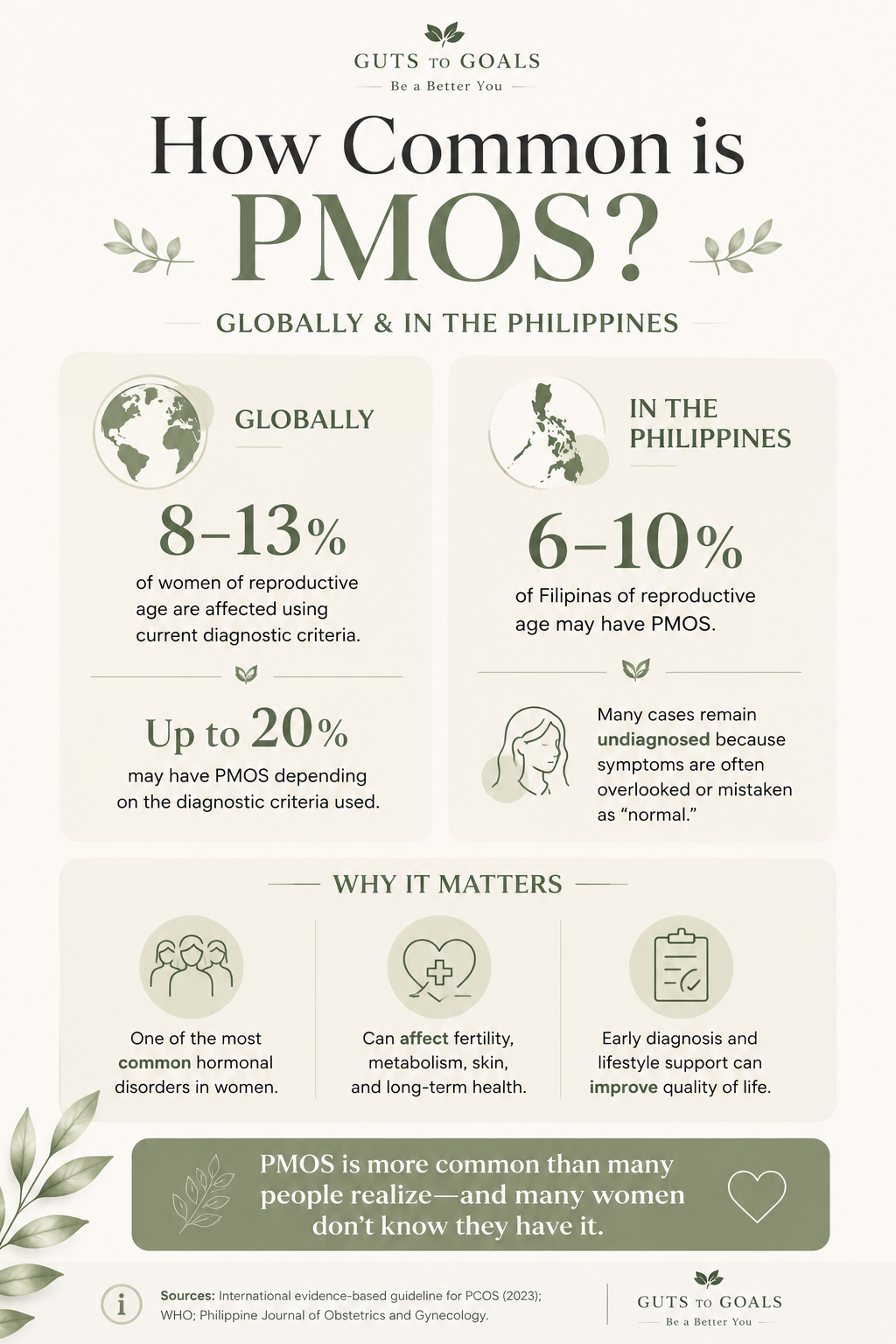
Current research estimates that between 8% and 13% of women of reproductive age have PMOS, making it one of the most frequently diagnosed endocrine disorders in women. However, experts also believe that up to 70% of affected women may remain undiagnosed, often because symptoms can vary greatly from person to person or develop gradually over time.
A Global Health Concern
PMOS is found in women from every country, ethnicity, and lifestyle. It is not limited to a specific race, body type, or age group. While symptoms often begin during the teenage years or early adulthood, some women are not diagnosed until they seek medical advice for irregular periods, difficulty becoming pregnant, or persistent symptoms such as acne or excessive hair growth.
Because the condition presents differently in each individual, diagnosis is not always straightforward. Some women experience only mild symptoms, while others have several features that significantly affect their daily lives.
PMOS in the Philippines
Although comprehensive nationwide data are still limited, healthcare professionals in the Philippines recognize PMOS as one of the most common endocrine conditions encountered among women of reproductive age. As awareness has grown, more women are seeking medical evaluation for symptoms such as irregular menstrual cycles, acne, unwanted hair growth, weight concerns, and fertility challenges.
Unfortunately, many women continue to dismiss these symptoms as “normal” or simply part of growing up. This can delay diagnosis and appropriate management for several years.
You’re Not Alone
Receiving a diagnosis of PMOS can feel overwhelming, but it is important to remember that you are far from alone. Millions of women around the world live with PMOS, and many successfully manage their symptoms with appropriate medical care, healthy lifestyle habits, and ongoing support.
The first step is understanding the condition. With greater awareness and early management, many women are able to improve their quality of life and reduce their risk of long-term complications.
Key Takeaway: PMOS affects approximately 1 in 8 women of reproductive age, yet many remain undiagnosed. Increasing awareness and recognizing the signs early can help women access appropriate care sooner.
Who Can Develop PMOS?
One of the biggest misconceptions about PMOS is that it only affects women who are overweight or trying to become pregnant. In reality, PMOS can affect women of different ages, body types, and backgrounds. Because symptoms vary from person to person, two women with PMOS may have very different experiences.
Understanding who can develop PMOS can help people recognize symptoms earlier and seek appropriate medical advice.
Teenagers and Young Adults
For many women, the first signs of PMOS begin during adolescence or the early years of adulthood. Irregular menstrual cycles, persistent acne that does not improve with typical treatments, or excessive facial and body hair may be among the earliest symptoms.
Because menstrual cycles can naturally be irregular for the first few years after a girl’s first period, diagnosing PMOS during adolescence requires careful evaluation by a qualified healthcare professional. Doctors usually consider the overall pattern of symptoms rather than relying on a single sign.
Women of Any Body Weight
Although PMOS is commonly associated with weight gain and obesity, not every woman with PMOS is overweight.
Some women have what is often called lean PMOS, meaning they have a body weight within the recommended range but still experience hormonal imbalances, irregular ovulation, acne, or fertility challenges. Even women with lean PMOS may develop insulin resistance or other metabolic concerns, highlighting the importance of individualized medical assessment.
This is why body weight alone should never be used to determine whether someone has or does not have PMOS.
Can You Have Regular Periods?
Many people assume that regular menstrual periods rule out PMOS. While irregular or absent periods are among the most common features, some women continue to menstruate regularly while still meeting the diagnostic criteria for PMOS.
Healthcare professionals consider several factors when making a diagnosis, including hormone levels, signs of excess androgens, ovulation patterns, and ultrasound findings when appropriate.
Does PMOS Run in Families?
Research suggests that genetics play an important role in the development of PMOS. Women who have a mother, sister, or close relative with PMOS may have a higher likelihood of developing the condition themselves.
However, genetics are only one part of the picture. Lifestyle, environmental influences, and individual metabolic differences also contribute to how PMOS develops and how symptoms appear. Having a family history does not guarantee that someone will develop PMOS, nor does the absence of family history rule it out.
It’s Different for Everyone
No two women experience PMOS in exactly the same way. Some may notice changes in their menstrual cycle during their teenage years, while others are diagnosed later after seeking help for acne, difficulty becoming pregnant, or unexplained metabolic changes.
This diversity is one of the reasons PMOS is often described as a syndrome rather than a single disease; it is a collection of related signs and symptoms that vary from person to person.
Key Takeaway: PMOS can affect teenagers and adults, women of any body weight, and people from all backgrounds. Symptoms vary widely, so the absence of one common feature, such as weight gain or irregular periods, does not necessarily rule out the condition.
What Causes PMOS?
One of the most common questions women ask after being diagnosed is:
“What caused my PMOS?”
The answer isn’t always straightforward.
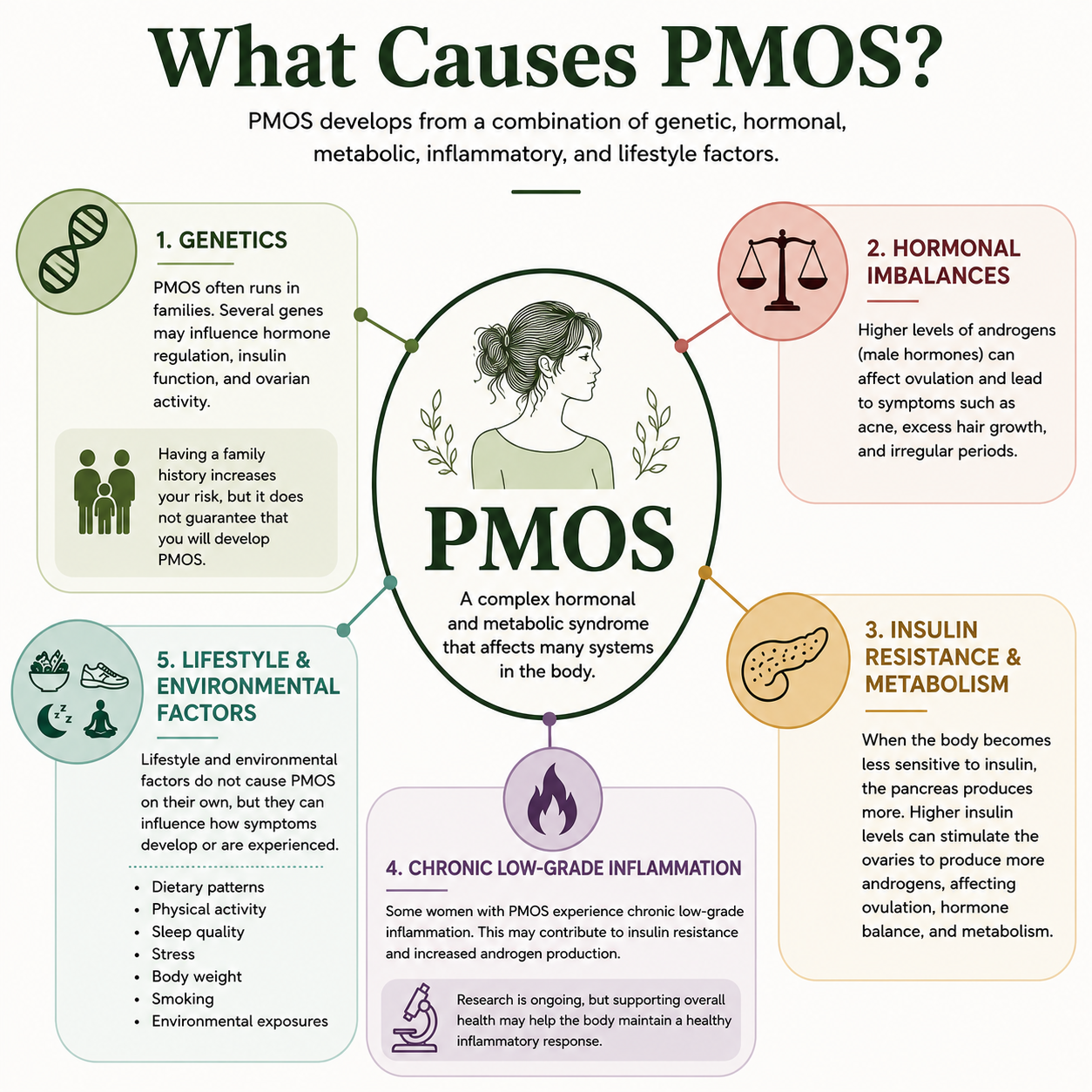
Rather than having a single cause, PMOS is believed to develop through a combination of genetic, hormonal, metabolic, and environmental factors. These factors interact differently in each individual, which helps explain why no two women experience PMOS in exactly the same way.
Researchers continue to study the condition, but current evidence suggests that PMOS develops when several biological processes influence one another over time.
Genetics: A Family Connection
PMOS often runs in families, suggesting that genetics play an important role.
If your mother, sister, or close female relative has PMOS, your own likelihood of developing the condition may be higher. Researchers have identified several genes that may contribute to hormone regulation, insulin function, and ovarian activity, although no single “PMOS gene” has been found.
Having a family history does not mean you will definitely develop PMOS. Likewise, women with no known family history can still be diagnosed with the condition.
Hormonal Imbalances
Hormones are chemical messengers that help regulate many essential functions, including ovulation, menstruation, metabolism, and reproduction.
In many women with PMOS, the body produces higher-than-normal levels of androgens, hormones that are present in both women and men but are usually found at much lower levels in women.
Elevated androgen levels may contribute to symptoms such as:
- Irregular or absent ovulation
- Acne
- Oily skin
- Excess facial or body hair
- Thinning hair on the scalp
These hormonal changes are one of the defining features of PMOS, although not every woman experiences them to the same degree.
Insulin Resistance and Metabolism
For many women, PMOS is also closely linked to insulin resistance.
Insulin is a hormone that helps move glucose (sugar) from the bloodstream into the body’s cells, where it is used for energy. When the body’s cells become less responsive to insulin, the pancreas produces more to compensate.
Higher insulin levels may stimulate the ovaries to produce more androgens, creating a cycle that can affect ovulation, hormone balance, and metabolism.
Not every woman with PMOS has insulin resistance, but it is considered one of the most common underlying features of the condition.
Learn more: Understanding Insulin Resistance in PMOS.
Chronic Low-Grade Inflammation
Research also suggests that some women with PMOS experience chronic low-grade inflammation.
Unlike the redness and swelling that occur after an injury, low-grade inflammation is subtle and often goes unnoticed. Scientists believe it may contribute to insulin resistance and increased androgen production in some individuals.
Exactly how inflammation contributes to PMOS is still being studied, but maintaining an overall healthy lifestyle may help support normal metabolic function and general well-being.
Learn more: Inflammatory PMOS: What Current Research Says.
Lifestyle and Environmental Factors
Lifestyle does not cause PMOS on its own, but it can influence how symptoms develop or are experienced.
Factors that may affect overall health include:
- Dietary patterns
- Physical activity
- Sleep quality
- Chronic stress
- Smoking
- Body weight
- Environmental exposures
These factors do not “cause” PMOS, but they may influence hormone regulation, insulin sensitivity, inflammation, and long-term health outcomes.
This is why healthcare professionals often recommend a comprehensive approach that includes balanced nutrition, regular physical activity, adequate sleep, stress management, and appropriate medical care.
A Condition with Many Pieces
One helpful way to think about PMOS is as a puzzle.
No single piece explains the entire condition.
Instead, genetics, hormones, metabolism, inflammation, and lifestyle all fit together to influence how PMOS develops and how symptoms appear. The combination is unique for every woman, which is why treatment and management often need to be individualized.
Key Takeaway: PMOS does not have one single cause. Current evidence suggests it develops through a combination of genetic, hormonal, metabolic, inflammatory, and environmental factors that interact differently from one person to another.
Common Signs and Symptoms of PMOS
One of the reasons PMOS can be difficult to recognize is that its symptoms vary widely from person to person. Some women experience only mild changes, while others develop several symptoms affecting different parts of the body.
Not every woman with PMOS will have all of these symptoms, and the severity can change over time.
Understanding the most common signs can help you recognize when it’s time to seek medical advice.
1. Irregular or Missed Menstrual Periods
Irregular menstrual cycles are among the most common signs of PMOS.
Some women may experience:
- Fewer than eight periods each year
- Menstrual cycles longer than 35 days
- Missed periods for several months
- Unpredictable cycle lengths
- Very heavy bleeding after a long delay
These changes often occur because ovulation does not happen regularly.
Read more: Irregular Periods and PMOS: What They May Mean
2. Difficulty Becoming Pregnant
Because ovulation may occur less often, or not at all, some women with PMOS have difficulty becoming pregnant.
However, PMOS does not mean infertility.
Many women with PMOS conceive naturally, while others benefit from lifestyle changes or fertility treatments recommended by their healthcare provider.
3. Acne and Oily Skin
Higher androgen levels may increase oil production in the skin.
This can lead to:
- Persistent acne
- Oily skin
- Breakouts on the face, chest, shoulders, or back
Unlike teenage acne, hormonal acne often continues into adulthood and may be difficult to control with over-the-counter products alone.
4. Excess Facial or Body Hair (Hirsutism)
Some women notice increased hair growth in areas where women typically have little hair, including:
- Chin
- Upper lip
- Chest
- Abdomen
- Back
This is known as hirsutism and is linked to elevated androgen levels.
5. Hair Thinning or Hair Loss
While some areas experience excess hair growth, the scalp may show the opposite effect.
Women with PMOS may notice:
- Thinning hair along the crown
- A widening part line
- Increased hair shedding
- Female-pattern hair loss
6. Weight Gain or Difficulty Losing Weight
Many, but not all, women with PMOS find it easier to gain weight and more difficult to lose it.
Insulin resistance may contribute to:
- Increased fat storage
- Greater hunger
- Stronger cravings
- Difficulty maintaining weight despite healthy habits
It’s important to remember that lean women can also have PMOS.
7. Darkened Skin and Skin Tags
Some women develop:
- Dark, velvety patches of skin (especially on the neck, underarms, or groin)
- Small skin tags
These changes may be associated with insulin resistance.
8. Fatigue and Low Energy
Many women report feeling tired even after getting enough sleep.
Fatigue may be influenced by:
- Hormonal changes
- Poor sleep quality
- Insulin resistance
- Stress
- Other medical conditions
Persistent fatigue should always be discussed with a healthcare professional, as it can have many possible causes.
9. Mood Changes
Living with PMOS can affect emotional well-being as well as physical health.
Some women experience:
- Anxiety
- Low mood
- Irritability
- Increased stress
- Reduced self-confidence due to visible symptoms
Seeking support from healthcare professionals, counselors, or support groups can be an important part of overall care.
10. Symptoms Can Change Over Time
PMOS is a lifelong condition, but its symptoms are not fixed.
They may change with:
- Age
- Lifestyle habits
- Pregnancy
- Weight changes
- Medical treatment
- Menopause
Regular follow-up with a healthcare provider helps ensure that management strategies remain appropriate as your needs change.
When Should You See a Healthcare Professional?
You should consider speaking with a healthcare professional if you experience:
- Irregular or absent periods
- Difficulty becoming pregnant
- Persistent acne that doesn’t improve
- Excess facial or body hair
- Unexplained hair thinning
- Rapid weight changes
- Symptoms that interfere with your daily life
Early evaluation can help identify PMOS or other conditions that may cause similar symptoms.
Key Takeaway: PMOS symptoms can affect the menstrual cycle, skin, hair, metabolism, fertility, and emotional well-being. Because symptoms vary widely, diagnosis should always be made by a qualified healthcare professional using established clinical criteria.
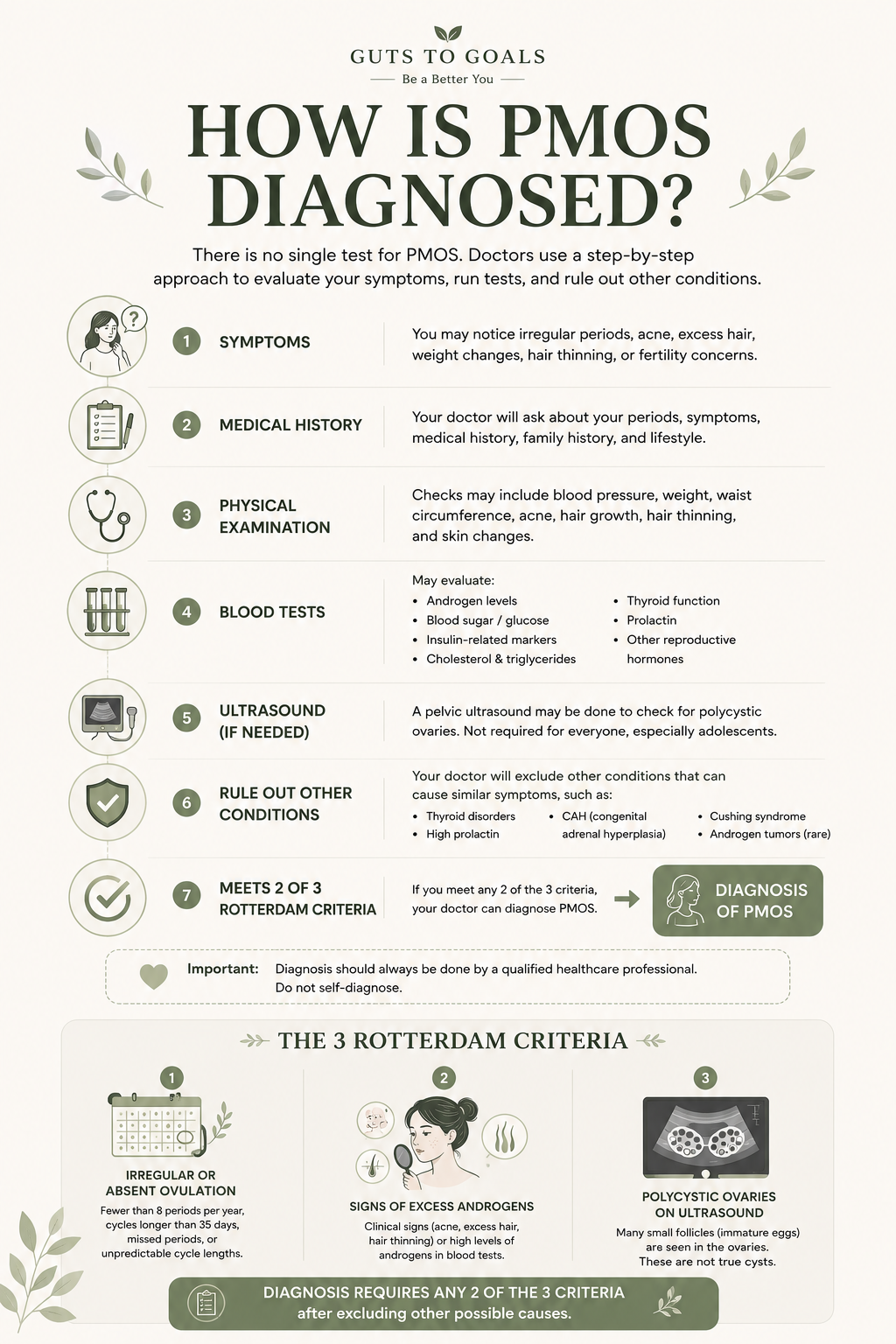
How Is PMOS Diagnosed?
There is no single test that can diagnose PMOS.
Instead, healthcare professionals combine your medical history, symptoms, physical examination, blood tests, and sometimes an ultrasound to determine whether you meet the diagnostic criteria while also ruling out other conditions that may cause similar symptoms.
Because PMOS affects each woman differently, the diagnostic process is individualized. Some women are diagnosed because of irregular menstrual cycles, while others seek medical advice for acne, excess hair growth, fertility concerns, or metabolic issues.
The Rotterdam Criteria
Today, most healthcare professionals use the Rotterdam Criteria, which were introduced in 2003 and continue to be recommended in international guidelines.
A diagnosis of PMOS is usually made when at least two of the following three features are present, after other possible causes have been excluded.
1. Irregular or Absent Ovulation
Ovulation is the process of releasing an egg from the ovary each month.
Women with PMOS may ovulate less frequently or not at all, leading to:
- Irregular menstrual cycles
- Long gaps between periods
- Missed periods
- Difficulty becoming pregnant
2. Signs of Excess Androgens
Higher-than-normal androgen levels may be identified in two ways.
Clinical signs include:
- Persistent acne
- Excess facial or body hair
- Thinning hair on the scalp
Blood tests may show elevated androgen levels, even if physical symptoms are mild.
Some women have noticeable symptoms despite normal laboratory results, while others have elevated hormone levels with only minimal visible changes.
3. Polycystic Ovaries on Ultrasound
An ultrasound may show that the ovaries contain many small follicles.
These follicles are immature eggs, not true ovarian cysts.
This distinction is important because the name “polycystic ovary syndrome” has led many people to believe that women with PMOS develop large ovarian cysts. In reality, the ultrasound appearance reflects follicles that have not fully matured due to disrupted ovulation.
Not every woman with PMOS has polycystic ovaries, and some women without PMOS may have this appearance on ultrasound.
Other Conditions Need to Be Ruled Out
Several medical conditions can cause symptoms similar to PMOS.
Before confirming the diagnosis, your healthcare professional may recommend tests to exclude other possible causes, such as:
- Thyroid disorders
- Elevated prolactin levels
- Congenital adrenal hyperplasia
- Cushing syndrome
- Androgen-producing tumors (rare)
Ruling out these conditions helps ensure that you receive the most appropriate treatment.
Common Tests Your Healthcare Provider May Recommend
Depending on your symptoms, your healthcare provider may recommend one or more of the following:
Medical History
Questions may include:
- When did your symptoms begin?
- How regular are your menstrual cycles?
- Have you noticed changes in your skin or hair?
- Are you trying to become pregnant?
- Is there a family history of PMOS, diabetes, or hormonal conditions?
Physical Examination
Your healthcare provider may assess:
- Blood pressure
- Height and weight
- Waist circumference
- Acne
- Hair growth patterns
- Hair thinning
- Skin changes such as acanthosis nigricans or skin tags
Blood Tests
Blood tests may help evaluate:
- Androgen levels
- Blood sugar or glucose control
- Insulin-related markers (when appropriate)
- Cholesterol and triglycerides
- Thyroid function
- Prolactin
- Other reproductive hormones
Not every woman will need every test. The evaluation is based on individual symptoms and medical history.
Pelvic Ultrasound
A pelvic ultrasound may be recommended, particularly in adults, to assess ovarian appearance and help support the diagnosis when appropriate.
However, ultrasound is not always necessary, especially in adolescents, because normal puberty can temporarily produce ovarian appearances similar to PMOS.
Why Early Diagnosis Matters
Early diagnosis allows women to better understand their symptoms and begin appropriate management.
Timely evaluation may help:
- Improve menstrual health
- Support fertility planning
- Identify metabolic concerns early
- Reduce the risk of long-term complications
- Improve overall quality of life
Even if you suspect PMOS, it is important not to self-diagnose. Many conditions share similar symptoms, making professional assessment essential.
Key Takeaway: PMOS is diagnosed using a combination of medical history, symptoms, physical examination, blood tests, and, when appropriate, ultrasound findings. Most healthcare professionals use the Rotterdam Criteria, which require two of three key features after excluding other possible causes.
Can PMOS Be Cured?
One of the first questions many women ask after being diagnosed with PMOS is:
“Can it be cured?”
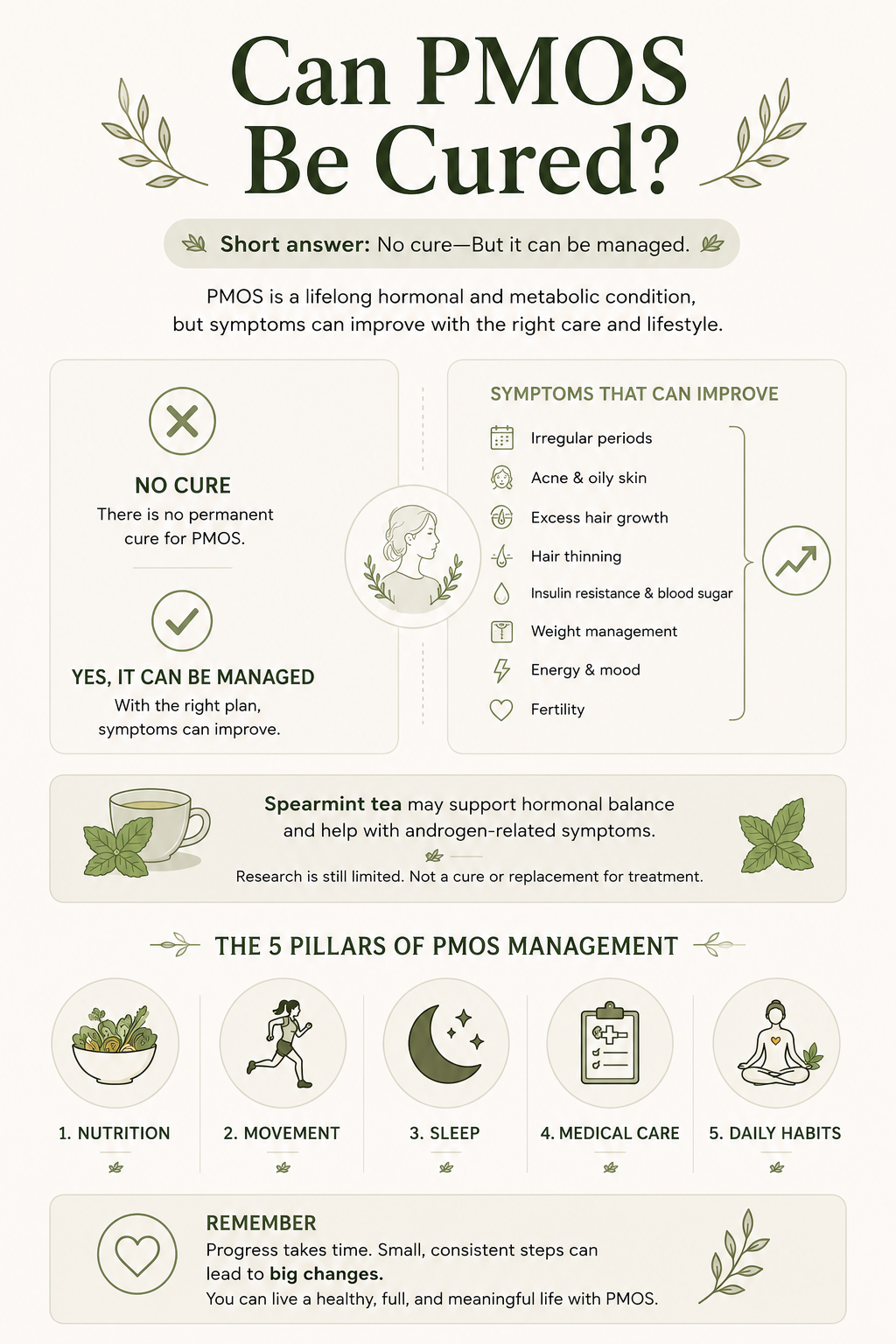
At present, there is no cure for PMOS. However, this does not mean that nothing can be done.
PMOS is considered a chronic (long-term) hormonal and metabolic condition, but many women are able to successfully manage their symptoms and improve their quality of life through a combination of healthy lifestyle habits, medical care, and ongoing monitoring.
For some women, symptoms may improve significantly over time. Others may notice that certain symptoms become more or less prominent during different stages of life, such as pregnancy or menopause.
The key is understanding that management, not cure, is currently the focus of treatment.
PMOS Looks Different for Every Woman
PMOS is not the same for everyone.
One woman may mainly experience:
- Irregular menstrual cycles
Another may struggle with:
- Acne and oily skin
Someone else may have:
- Insulin resistance
- Difficulty managing weight
- Fertility concerns
Because symptoms vary, treatment plans are usually tailored to the individual’s goals and health needs.
What Can Be Improved?
Although PMOS cannot currently be cured, many symptoms can often be managed successfully.
Depending on the individual, treatment may help improve:
- Menstrual cycle regularity
- Ovulation
- Acne
- Excess facial or body hair
- Hair thinning
- Insulin sensitivity
- Blood sugar management
- Cholesterol levels
- Fertility
- Energy levels
- Overall quality of life
Not every woman will experience the same improvements, but many see meaningful progress with consistent care.
Lifestyle Is an Important Part of Management
Healthy lifestyle habits are considered one of the foundations of PMOS management.
Healthcare professionals commonly recommend:
Balanced Nutrition
Eating a balanced diet that includes vegetables, fruits, whole grains, lean protein, healthy fats, and fiber may support overall metabolic health and help regulate blood sugar levels.
Rather than focusing on restrictive diets, many experts encourage building sustainable eating habits that can be maintained long term.
Read more: The Best Diet for PMOS: What Current Research Says
Regular Physical Activity
Exercise offers benefits beyond weight management.
Regular movement may help:
- Improve insulin sensitivity
- Support cardiovascular health
- Maintain muscle mass
- Improve mood
- Increase energy
Even moderate activities such as walking, cycling, resistance training, or swimming can contribute to overall health.
Sleep and Stress Management
Poor sleep and chronic stress may influence hormone regulation and overall well-being.
Simple habits such as maintaining a consistent sleep schedule, practicing relaxation techniques, and making time for enjoyable activities may support long-term health.
Medical Treatment May Also Be Recommended
Depending on your symptoms and personal goals, your healthcare provider may recommend medications or other treatments.
These may help address:
- Irregular menstrual cycles
- Acne
- Excess androgen levels
- Insulin resistance
- Fertility concerns
The most appropriate treatment varies from person to person and should always be discussed with a qualified healthcare professional.
Where Does Spearmint Tea Fit In?
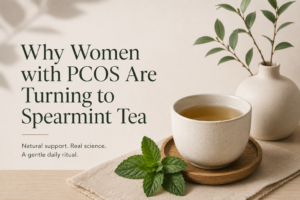
Some women choose to include spearmint tea as part of their overall wellness routine.
Early research suggests that spearmint tea may help support hormonal balance in some women with PMOS, particularly regarding androgen-related symptoms. However, the current evidence is still limited, and larger, long-term studies are needed.
Spearmint tea should not be viewed as a cure or replacement for medical treatment. Instead, it may be considered one component of a healthy lifestyle alongside balanced nutrition, regular physical activity, adequate sleep, stress management, and appropriate medical care.
Read more: Spearmint Tea for PMOS: What Does the Research Say?
Living Well with PMOS
Receiving a diagnosis of PMOS can feel overwhelming at first, but it does not define your future.
Many women with PMOS complete their education, build successful careers, have families if they choose, enjoy active lifestyles, and maintain good long-term health.
Learning about the condition, working with your healthcare team, and making sustainable lifestyle choices can make a meaningful difference over time.
Progress may not happen overnight, but small, consistent steps often have the greatest impact.
Key Takeaway: While there is currently no cure for PMOS, many symptoms can be effectively managed through healthy lifestyle habits, appropriate medical care, and regular follow-up. The goal is not perfection; it is long-term health, symptom control, and improved quality of life.
Long-Term Health Considerations of PMOS
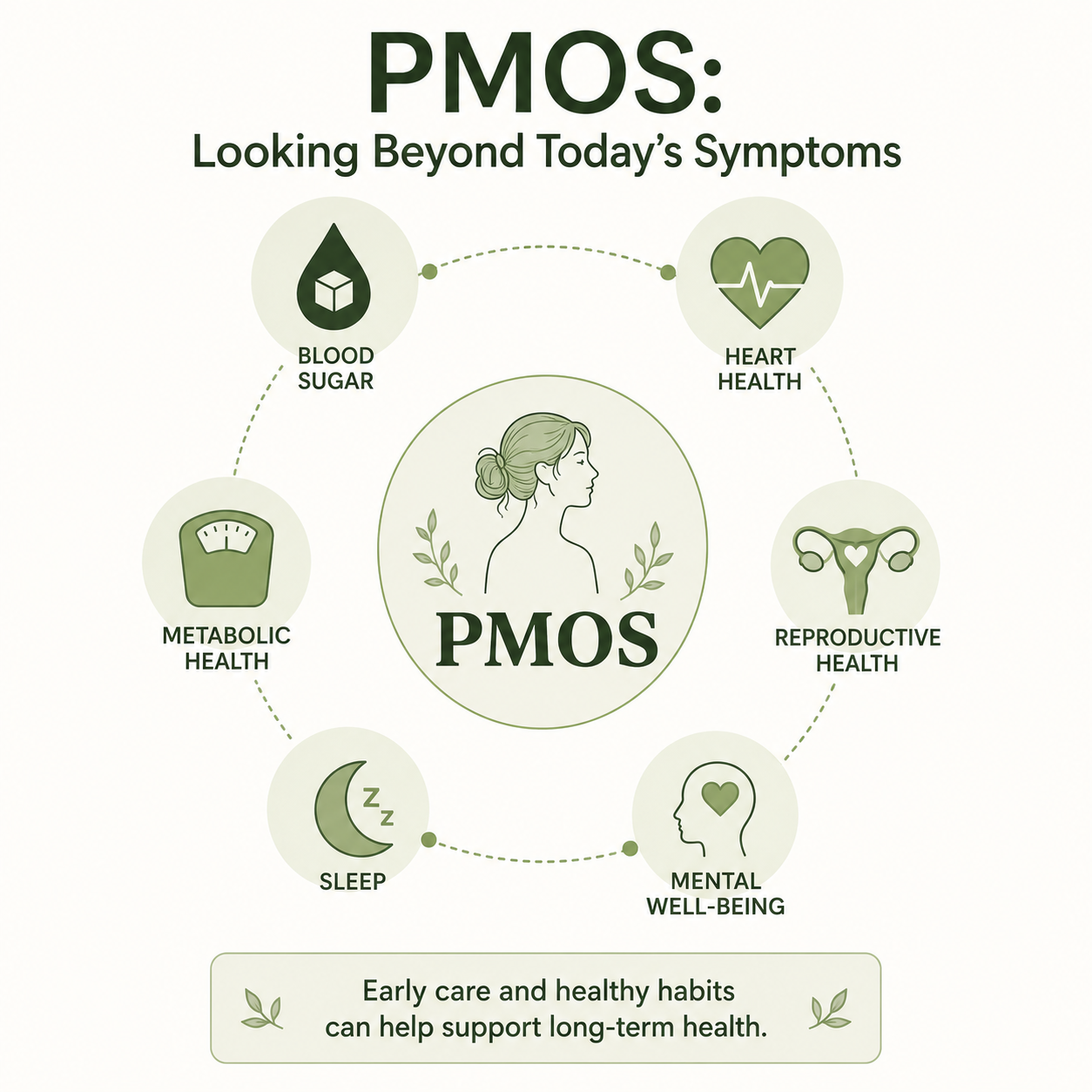
PMOS is often recognized because of symptoms such as irregular periods, acne, or unwanted hair growth. However, the condition can also affect long-term health, particularly when hormonal and metabolic changes remain unmanaged over time.
It is important to remember that having PMOS does not mean you will develop these conditions. Instead, it may increase the likelihood of certain health concerns in some women. Many of these risks can be reduced through early diagnosis, regular medical care, and healthy lifestyle habits.
Insulin Resistance and Type 2 Diabetes
Many women with PMOS have insulin resistance, meaning their bodies become less responsive to insulin.
Over time, this may increase the risk of:
- Prediabetes
- Type 2 diabetes
Regular screening for blood sugar levels allows healthcare providers to identify changes early and recommend appropriate management.
Heart and Blood Vessel Health
PMOS is associated with several factors that can influence cardiovascular health.
Some women may develop:
- High blood pressure
- Unhealthy cholesterol levels
- Elevated triglycerides
Although serious heart disease usually develops later in life, adopting healthy habits early may help reduce long-term cardiovascular risk.
Endometrial Health
When ovulation occurs infrequently, the lining of the uterus (endometrium) may continue to build up without being shed regularly through menstruation.
Over many years, this may increase the risk of endometrial hyperplasia, a thickening of the uterine lining that can sometimes progress to more serious conditions if left untreated.
Regular menstrual cycles, whether naturally or through treatment recommended by a healthcare provider, help support endometrial health.
Fertility Challenges
Not every woman with PMOS experiences infertility.
However, irregular ovulation can make it more difficult to become pregnant.
The encouraging news is that many women with PMOS conceive naturally, while others achieve pregnancy with lifestyle changes or fertility treatments guided by healthcare professionals.
Sleep Problems
Research suggests that women with PMOS may be more likely to experience sleep disturbances, including obstructive sleep apnea, particularly when other risk factors such as obesity are present.
Poor sleep may also affect:
- Energy levels
- Mood
- Insulin sensitivity
- Overall quality of life
Improving sleep habits is an important part of long-term PMOS management.
Mental and Emotional Well-Being
Living with a chronic condition can affect emotional health.
Some women with PMOS experience:
- Anxiety
- Depression
- Low self-esteem
- Body image concerns
- Increased stress
These experiences are common and deserve the same attention as physical symptoms. Talking with a healthcare professional or mental health provider can be an important part of comprehensive care.
Metabolic Syndrome
Some women with PMOS may develop metabolic syndrome, a group of conditions that includes:
- Increased waist circumference
- Elevated blood pressure
- High blood sugar
- Abnormal cholesterol or triglyceride levels
Metabolic syndrome increases the risk of cardiovascular disease and type 2 diabetes, making regular health monitoring especially important.
The Good News
Although PMOS is associated with several long-term health considerations, many of these risks can be reduced.
Small, consistent lifestyle changes, regular check-ups, and appropriate medical care can make a meaningful difference over time.
The goal of PMOS management is not simply to improve symptoms today; it is also to support your health for years to come.
Protecting Your Long-Term Health
Healthcare professionals often recommend:
- Maintain a balanced, nutrient-rich diet.
- Stay physically active throughout the week.
- Get adequate, consistent sleep.
- Attend regular medical check-ups.
- Monitor blood pressure, blood sugar, and cholesterol as advised.
- Take prescribed medications as directed.
- Seek support for emotional well-being when needed.
These habits benefit overall health whether or not symptoms are currently noticeable.
Key Takeaway: PMOS can increase the risk of certain long-term health conditions, but it does not guarantee they will occur. Early diagnosis, regular monitoring, and healthy lifestyle habits can help reduce these risks and support lifelong well-being.
Living Well with PMOS
A diagnosis of PMOS can feel overwhelming at first, but it is important to remember that PMOS does not define your future.
While there is currently no cure, many women successfully manage their symptoms and live healthy, active lives. The goal is not to be perfect, it is to build sustainable habits that support your hormones, metabolism, and overall well-being.
Small changes, practiced consistently, often have a greater impact than extreme approaches that are difficult to maintain.
1. Eat a Balanced, Sustainable Diet
There is no single “PMOS diet” that works for everyone.
Instead, many healthcare professionals recommend a balanced eating pattern that includes:
- Plenty of vegetables and fruits
- Whole grains and high-fiber foods
- Lean protein
- Healthy fats
- Minimally processed foods
A balanced diet may help support:
- Blood sugar regulation
- Energy levels
- Heart health
- Healthy weight management
Rather than eliminating entire food groups, focus on building meals that are satisfying, nourishing, and realistic for your lifestyle.
Continue Reading: The Best Diet for PMOS: Evidence-Based Nutrition Tips
2. Stay Physically Active
Exercise is one of the most effective lifestyle strategies for supporting overall health with PMOS.
Regular physical activity may help:
- Improve insulin sensitivity
- Support cardiovascular health
- Maintain muscle mass
- Improve mood
- Increase energy
You do not need intense workouts every day.
Walking, strength training, cycling, swimming, dancing, or yoga can all contribute to better health when done consistently.
Aim to choose activities that you enjoy and can continue long term.
3. Prioritize Quality Sleep
Sleep is often overlooked, yet it plays an important role in hormone regulation and metabolic health.
Adults should generally aim for 7–9 hours of quality sleep each night.
Good sleep habits include:
- Keeping a regular bedtime
- Limiting screen time before bed
- Creating a cool, comfortable sleeping environment
- Avoiding excessive caffeine late in the day
Better sleep can support energy, mood, and overall well-being.
4. Manage Stress
Stress is a normal part of life, but chronic stress may affect overall health and make healthy habits more difficult to maintain.
Helpful strategies may include:
- Deep breathing exercises
- Meditation or mindfulness
- Spending time outdoors
- Journaling
- Talking with trusted friends or family
- Enjoying hobbies and relaxation
Managing stress is not about avoiding challenges; it is about building healthy ways to respond to them.
5. Work with Your Healthcare Team
PMOS management is most effective when it is personalized.
Regular follow-up appointments allow your healthcare provider to:
- Monitor your symptoms
- Review blood tests
- Adjust treatments when necessary
- Screen for long-term health concerns
- Answer questions as your needs change
Don’t hesitate to ask questions or discuss new symptoms during your appointments.
6. Consider Supportive Daily Habits
Some women choose to include supportive wellness habits as part of their routine.
These may include:
- Drinking enough water
- Limiting smoking and excessive alcohol intake
- Maintaining a regular eating schedule
- Practicing good sleep hygiene
- Drinking beverages such as spearmint tea as part of an overall healthy lifestyle
Research on spearmint tea is promising but still evolving. While some studies suggest it may support hormonal balance in certain women, it should be viewed as a complement, not a replacement, for medical care and other healthy habits.
Progress Takes Time
PMOS management is a journey rather than a quick fix.
Some women notice improvements within a few months, while others require longer-term adjustments. Progress may not always be linear, and occasional setbacks are normal.
The most effective approach is one that you can maintain over time, not one that promises rapid results.
Remember that every positive choice, no matter how small, contributes to your long-term health.
Key Takeaway: Living well with PMOS is about building consistent habits that support your overall health. A balanced diet, regular physical activity, quality sleep, stress management, personalized medical care, and realistic daily routines work together to help manage symptoms and improve quality of life.
Living Well with PMOS
One of the most important things to remember is that PMOS isn’t managed by doing one thing perfectly; it’s managed by building small, consistent habits over time.
Some days won’t go as planned, and that’s okay. What matters most is creating a routine you can realistically maintain.
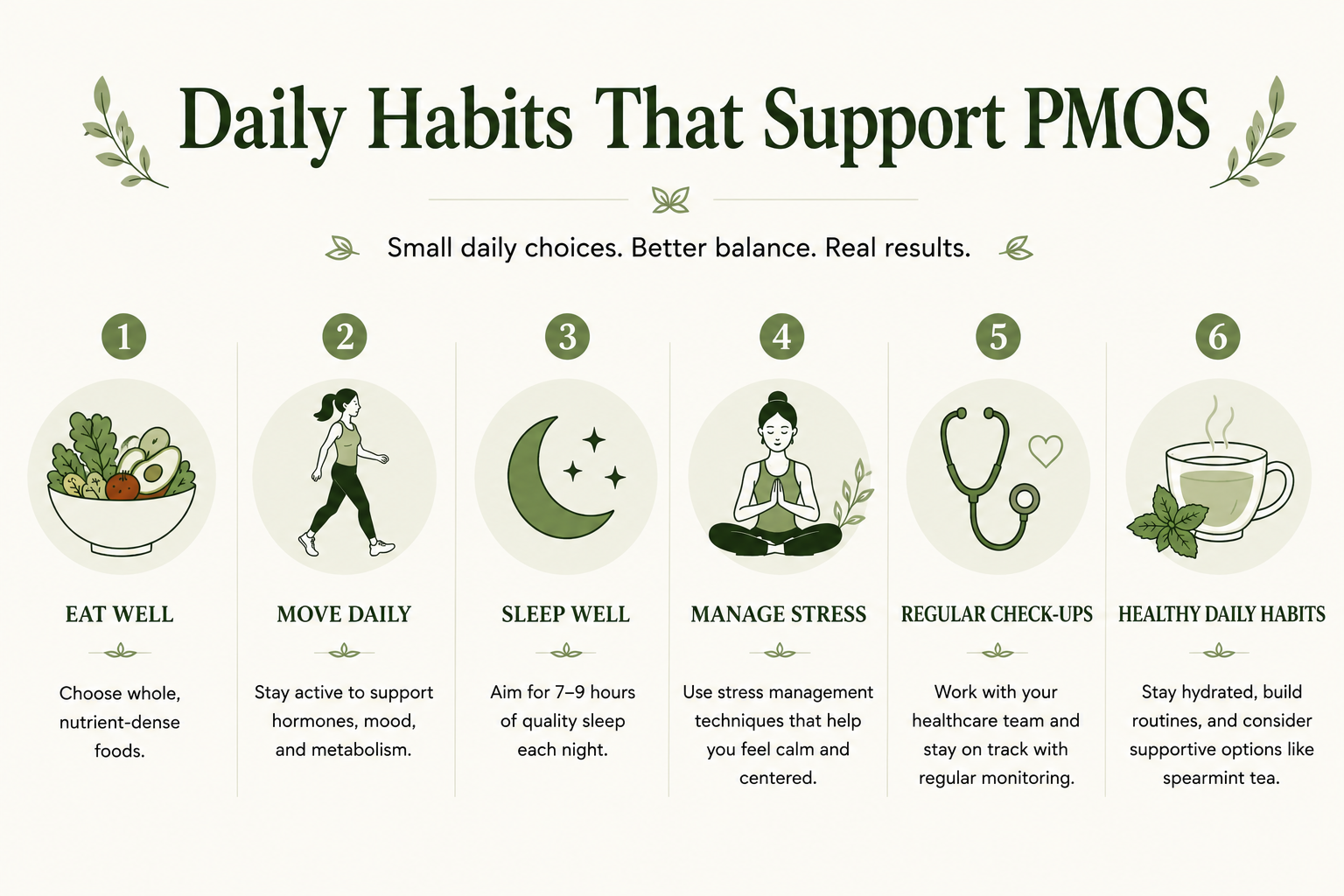
The illustration below summarizes the daily habits that support hormone and metabolic health.
Take the First Step Today
Understanding PMOS is the first step. Building healthy habits is what comes next.
Whether you’re improving your nutrition, getting more sleep, moving your body, or simply enjoying a calming cup of pure spearmint tea, small daily choices can support your long-term health.
Explore Guts To Goals’ wellness collection and discover simple products that fit naturally into your daily routine.






Comments
No comments yet. Be the first to share your thoughts!