











PCOS Explained: Everything Beginners Need to Know
Understanding PMOS
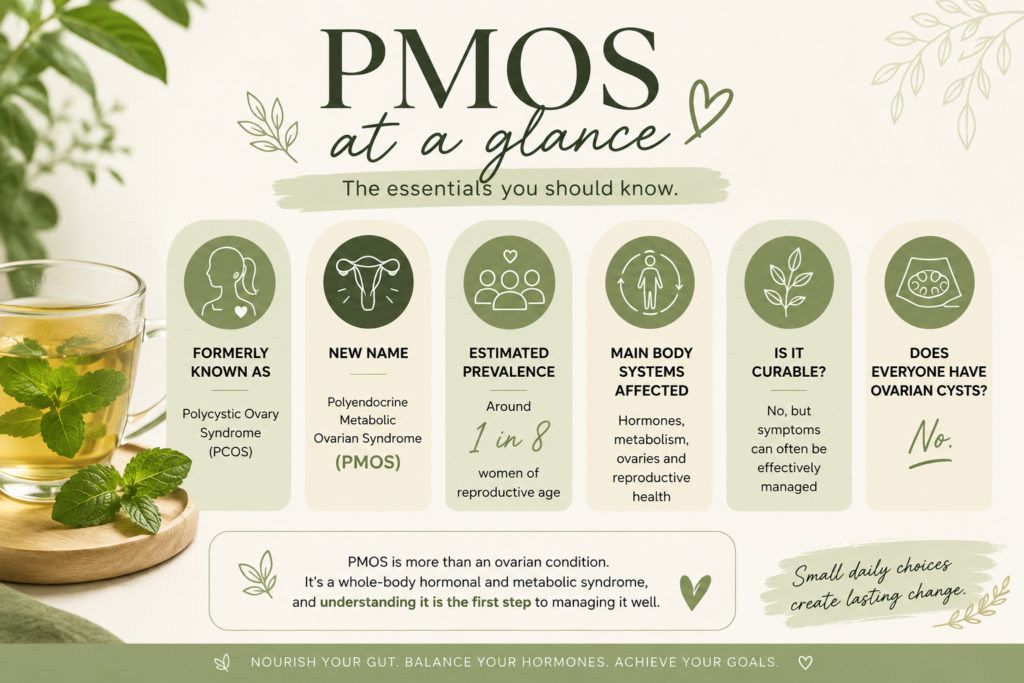
If you’ve recently searched for PCOS, you may have noticed a new name appearing: PMOS, or Polyendocrine Metabolic Ovarian Syndrome.
You’re not imagining things. In 2026, an international panel of experts recommended renaming the condition because the old term Polycystic Ovary Syndrome (PCOS) did not accurately describe what the condition really is. Many people diagnosed with PCOS never develop ovarian cysts, while others experience symptoms that affect far more than their ovaries.
The new name, PMOS, better reflects what healthcare professionals have learned over the years: this is a condition that can affect hormones, metabolism, ovulation, skin, fertility, and long-term health.
Although the name has changed, many healthcare providers, research papers, and websites still use the term PCOS. Throughout this article, you’ll see both names used so readers can easily understand the transition.
Timeline of the Name Change
1935
The condition is first described in the medical literature by Drs. Irving Stein and Michael Leventhal.
1990–2023
The condition becomes widely known worldwide as Polycystic Ovary Syndrome (PCOS).
2023
International evidence-based guidelines continue refining diagnosis and management while recognizing that the name “PCOS” does not fully reflect the condition.
2026
An international expert group recommends adopting the term Polyendocrine Metabolic Ovarian Syndrome (PMOS) to represent its hormonal and metabolic nature better.
What Happens in PMOS?
PMOS develops because several hormone systems become disrupted.
Many people experience:
- Higher-than-normal androgen (“male”) hormone levels
- Irregular ovulation
- Insulin resistance
- Chronic low-grade inflammation in some individuals
- Metabolic changes that can affect weight and energy
These hormonal changes can produce a wide range of symptoms, and no two people experience PMOS in exactly the same way.
Common Signs and Symptoms of PMOS
Symptoms vary from person to person, but common signs include:
Hormonal
- Irregular or absent periods
- Persistent acne
- Increased facial or body hair
- Thinning scalp hair
Metabolic
- Weight gain or difficulty losing weight
- Insulin resistance
- Increased waist circumference
- Fatigue after meals
Skin
- Oily skin
- Darkened skin around the neck, underarms, or groin (acanthosis nigricans)
- Skin tags
Fertility
- Difficulty ovulating
- Difficulty becoming pregnant
What PMOS Is NOT
Many myths still surround PMOS. Here are a few important facts:
- PMOS is not caused by eating too much sugar.
- PMOS is not your fault.
- PMOS does not always cause infertility.
- PMOS does not mean you have ovarian cysts.
- PMOS does not look the same in everyone.
Some people are lean, while others are overweight. Some have regular periods but elevated androgen levels, while others mainly experience irregular ovulation.
When Should You See a Healthcare Professional?
Consider speaking with a healthcare professional if you experience several of the following:
- Irregular menstrual cycles
- Persistent acne that doesn’t improve
- Increased facial or body hair
- Hair thinning
- Difficulty becoming pregnant
- Unexplained weight gain
- Darkened patches of skin around the neck or underarms
Early diagnosis can help identify potential metabolic concerns and provide access to treatments and lifestyle strategies that may improve symptoms and long-term health.
How Is PMOS Diagnosed?
Healthcare professionals commonly diagnose PMOS using internationally accepted criteria. In most adults, a diagnosis is made when two of the following three features are present after excluding other possible causes:
- Irregular or absent ovulation
- Clinical or biochemical signs of elevated androgen levels
- Polycystic ovarian morphology on ultrasound
Importantly, not everyone with PMOS has ovarian cysts, and an ultrasound alone cannot diagnose the condition.
Your healthcare provider may also recommend blood tests to evaluate hormone levels, blood sugar, cholesterol, thyroid function, or other conditions that can mimic PMOS.
Living Well with PMOS
Although PMOS is considered a lifelong condition, many people successfully manage their symptoms through a combination of medical care and sustainable lifestyle habits.
These may include:
- Eating a balanced, nutrient-rich diet
- Staying physically active
- Getting adequate sleep
- Managing stress
- Attending regular medical checkups
- Taking medications when recommended by a healthcare professional
Many individuals also enjoy caffeine-free beverages such as pure spearmint tea as part of their daily wellness routine. Early research suggests spearmint tea may influence free testosterone levels in some women, but it should not be viewed as a cure. It works best as one component of an overall management plan.
Frequently Asked Questions
Can you have PMOS without ovarian cysts?
Yes. Many people diagnosed with PMOS do not have ovarian cysts visible on ultrasound.
Can thin women have PMOS?
Yes. While excess weight can worsen symptoms in some people, PMOS also affects individuals with a healthy body weight.
Is PMOS hereditary?
Genetics appear to play a role. Having a close family member with PMOS may increase your risk, although environmental and lifestyle factors also contribute.
Can PMOS be cured?
There is currently no cure, but many people successfully manage their symptoms through lifestyle changes, appropriate medical treatment, and ongoing monitoring.
Is PMOS the same as PCOS?
Yes. PMOS is the updated name recommended by international experts. Because the terminology is still transitioning, you’ll continue to see both names used in healthcare settings and online.
Key Takeaway
PMOS (formerly known as PCOS) is far more than an ovarian condition. It is a complex endocrine and metabolic syndrome that can affect hormones, ovulation, skin, fertility, and long-term health. Understanding the condition is the first step toward making informed decisions about your care.
While there is no single solution, many people improve their quality of life through evidence-based medical care, balanced nutrition, regular physical activity, good sleep, stress management, and sustainable daily habits.
How do you feel about the shift from PCOS to PMOS? Let’s chat in the comments below!
Citations
- Monash University. International Evidence-Based Guideline for the Assessment and Management of PMOS (2026 Update).
- World Health Organization. Polycystic Ovary Syndrome (PCOS/PMOS) Fact Sheet.
- National Institute of Child Health and Human Development (NICHD). Polycystic Ovary Syndrome (PCOS).
- Society for Endocrinology. Position statements and educational resources on PMOS/PCOS.
- International evidence-based guideline publications in peer-reviewed endocrinology and women’s health journals.






Comments
No comments yet. Be the first to share your thoughts!